

We Asked the Wrong Question: What Canadians Told Us About the Snowbird Slowdown
We asked where all the Canadians went. Thousands told us the question was the problem. Here's what they said, and what we got wrong the first time.
Editor's note (updated September 26, 2026):
On August 6, 2026, we originally published this piece under the headline "Where Did All the Canadians Go?" It reached more than 400,000 people and drew thousands of comments, most of them from Canadians telling us the question itself was the problem. They were right. We have rewritten the article rather than deleting it, because we'd rather correct our mistake in public than quietly disappear it. What follows is the revised version, shaped by what Canadians told us directly. Our full statement is on our Instagram and Facebook.
This summer we published an article asking where all the Canadians had gone. Thousands of Canadians answered, and the answer was not complicated. It was some version of: you know exactly where we went, and you know exactly why.
One reply summed up the whole thing in a sentence. "It's not you, it's him." Another, from someone who told us the post read as "we miss your money," and that “Palm Springs Loves Canada” banner signs and stickers will not fix what has been done. That comment has more than two hundred likes and we hear you fully. Thank you for telling us plainly where we got it wrong in our attempts to simply say: we miss you, we love you, and we're sorry. 💗
So we want to answer our own question honestly this time, and put our position where it should have been from the start. We do not support what this administration is doing to Canada. The talk of making it the 51st state, the taunting of a sitting prime minister, the tariffs, the way Canadians are now treated at our border – we think it is shameful, and we understand completely why people who spent thirty winters here have decided to spend this one somewhere else. If you are boycotting, you have our respect.
Why are Canadians not coming to Palm Springs? Canadians are staying away primarily because of how the United States government has treated Canada: annexation rhetoric, tariffs, and border enforcement that many travelers now consider a personal risk. A weak Canadian dollar and rising costs make it harder still. Most Canadians who spoke to us drew a clear line between the U.S. administration and ordinary Americans, and many said they will reconsider when the political situation changes.
What We Got Wrong Before
We framed a well-understood situation as a mystery. We’re very sorry about that. Canadians have been explaining their reasoning for a long time now, to anyone who would listen. Asking them to explain it again, in a cheerful caption, was careless.
We led with economics before. Our original piece opened with the exchange rate, airfare, and paperwork, and treated politics as one factor among several. Canadians corrected that repeatedly, and one line stuck with us: it isn't the tariffs, it's the insults. A Canadian commenter put the question back to us plainly – would Americans be offended if another head of state referred to the president as the "premier" of America's eleventh province?
We stayed neutral before, which we told ourselves was the inclusive choice. It wasn't. In a moment like this, neutrality is just an unfortunate way of siding with what's happening.
What the Numbers Actually Show
The data is real, and it belongs in this story. It just isn't the story.
Canadian passenger arrivals at Palm Springs International Airport fell roughly 27% in August 2025, 42% in September, and 30% in October, according to figures presented to the Palm Springs Airport Commission. Airlines trimmed winter service accordingly. For February 2026, the heart of the season, the airport projected about 25 fewer arriving Canadian flights.
Nationally, Statistics Canada reported that Canadian trips to the U.S. grew year over year for five straight months through August 2026, though air travel remained roughly 23% below 2024 levels. Then trade talks between Ottawa and Washington collapsed in late August, followed by new tariffs on both sides.
One thing we should have been clearer about the first time: those figures describe last season. It is late September, so this season hasn't started. As more than one Canadian pointed out, with the patience of someone explaining something obvious, they come in October.
What Canadians Actually Told Us
Here are some important things we learned from social comments made from our Canadian friends:
Most people separated the country from its government. Over and over we heard: we love Americans, we love Palm Springs, and we're staying away from what your president is doing. One Canadian wrote that they have never seen Canadians this hurt, angry, and resolved, and also that they miss their Palm Springs friends dearly. Both things were true in the same comment, constantly.
Another story was directly shared with us about a Canadian gay couple who were recently here to help a US friend in need, saying it’s socially unacceptable to visit the USA under its current leadership, and that they feel they cannot let anyone know they are here.
Safety and the border. Canadians described phone and social media searches at the border, fear of detention, and the registration requirement for stays of 30 days or more. Whatever the statistical likelihood of any individual encounter, the fear is real and it is shaping decisions. Several people said plainly that they no longer feel safe crossing, and one specifically cited anti-LGBTQ+ legislation in other parts of the country as part of why the U.S. doesn't feel welcoming anymore.
Cost is a genuine factor, not an excuse. A number of Canadians who are not boycotting said the math simply stopped working. The loonie has been hovering around 72 U.S. cents. A Canadian visitor described a downtown room that now runs past $600 CAD a night after exchange and fees. Another claimed they were priced out a drive down at roughly $12,000 CAD in fuel. Several mentioned golf pricing and one-month minimum rental rules. One made a concrete suggestion we'd pass along to every business in the valley: banners are cute (are they though?), but Vegas and New York offered Canadians actual exchange-rate deals.
A lot of Canadians are still coming. This is the part our original article failed to touch upon, and we're sorry for that. "See you in November." "Back in February." "My 45th trip." One local business owner said 90% of their Canadian customers were here last winter. Canadians who own homes here are the most likely to return, often because of friendships they aren't willing to abandon. One longtime owner wrote that if they didn't have those ties they'd probably travel elsewhere, but they do, so they're coming.
And some are not coming back at all. Several people said the damage is permanent regardless of who holds office. Others have already sold. Puerto Vallarta, Mexico more broadly, Portugal, Spain, Italy, Costa Rica, Thailand, and travel within Canada came up again and again. Someone coined a word for it that we suspect will stick: Snowmads.
About Palm Springs, Specifically
We are not going to tell you this city is a bubble untouched by any of it. Commenters correctly noted that Riverside County went for Trump (under the assumption that any of this was a fair election), that some parts of the valley fly a lot of flags, and some visitors have described other uncomfortable encounters in another desert city outside of Palm Springs. Claiming sanctuary status for an entire region would be exactly the kind of gloss that got us in the hot seat in the first place.
What we can say is narrower and true. Palm Springs is a majority-LGBTQ+ city with a long history of voting true blue and taking care of people the rest of the country wasn't taking care of. Everyone we know is furious about what's being done inside our borders and beyond them. The businesses that have been quiet this year are largely small, local, and queer-owned, and many of them are run by people who vote the same way we do.
Which brings us to the thing Canadians asked for most often, more than banners and more than apologies: VOTE. Many of you said you're watching November. For whatever it's worth from two guys in the desert, our vote is always blue, and you better believe we'll be voting.
Where We Land
If you're Canadian and you've decided to spend your winter somewhere else, we certainly understand, and we'd probably make the same call. If you're coming back this season, whether because you own a place or because you have other reasons to be here regardless of all the hurdles and difficulties, we'll be glad to see you again. And if you're an American reading this, the most useful thing you can do is vote in November, and to remain honest about what's happening in the meantime.
We'll keep writing about this city because we love it. We'll try to do it with our eyes open. 🇨🇦🏳️🌈💗
Canadians, if there's something we still got wrong here, tell us. We're reading.

Is Palm Springs Still Fun If You're Not Here to Party?
Gay Palm Springs beyond the bars: discover why the best trip here is more than just the nightlife. Spas, design, nature, queer culture & so much more await. 🌴
Somewhere along the way, Palm Springs earned a reputation as the gay man's ultimate party destination – pool events, Arenas Road, drag shows, late nights that blur into warm mornings, and the kind of freedom that makes you feel 28 again even when you're decidedly not. That reputation is often deserved, and we celebrate it. But Palm Springs is just as spectacular when the music stops.
There is a version of this city that has nothing to do with bars, nothing to do with Jell-O shots, and nothing to do with what time you stumbled back to your hotel room. It's when the morning light pours across the mountains, a canyon trail that feels like it belongs on another planet, a spa experience rooted in thousands of years of Indigenous history, and a patio dinner with friends so good that the only after-party you'll want is a moonlit dip in the pool. That version is not a compromise – it’s more of a flex. 😎
So yes – Palm Springs is all kinds of fun if you're not here to party. The more interesting question is: why does the sober-curious, culture-hungry, design-obsessed, nature-loving, or simply exhausted version of Palm Springs still feel so rich? Let's get into it.
Is Palm Springs still fun if you're not here to party? In Short…
Yes – and arguably more so. Palm Springs offers one of the most complete non-nightlife travel experiences of any LGBTQ+ destination in the world. Visitors who skip the bars can fill their days with midcentury modern architecture tours, desert canyon hikes, Indigenous-owned mineral spa experiences, world-class restaurants, LGBTQ+ film festivals, drag brunches, and poolside relaxation within one of the most affirming queer communities in the United States. With nearly 50% of residents identifying as LGBTQ+, queer visibility here is woven into the everyday fabric of the city – not just confined to Arenas Road on a Saturday night. Palm Springs has more than 300 days of sunshine annually, a compact and walkable downtown, and a lifestyle quality that routinely converts first-time visitors into future residents.
Gay by Day in Palm Springs
Most nightlife-heavy destinations spend the daylight hours waiting to come alive. Palm Springs is the opposite. The city before dinner is, in many ways, its best self.
Start downtown on Palm Canyon Drive, where the walkability alone feels like a love language. Just beyond the giant “Forever Marilyn” statue in our downtown park – the Palm Springs Art Museum anchors the cultural core with a permanent collection that includes LGBTQ+ works, contemporary art, and rotating exhibitions worth building an entire afternoon around. Just up the street, the Agua Caliente Cultural Museum tells the history of the Cahuilla people whose land this has always been – context that makes the entire valley feel more layered and alive. Walk north into the Uptown Design District and the afternoon becomes its own event. Vintage furniture, gallery spaces, boutique hotels, and design shops line the blocks in a way that rewards slow browsing far more than a determined march. On Thursday evenings, VillageFest closes Palm Canyon Drive to traffic and transforms the street into an open-air market of local vendors, food, live music, and the relaxed social energy that Palm Springs does so naturally.
None of this requires a drink. All of it requires the desire to show up and get inspired.
Choose Your Vibe
One of the most useful ways to plan a non-party Palm Springs trip is to think in moods rather than categories. The city accommodates vastly different travel energies, often within the same 24-hour stretch.
If You Want to Reset
The wellness infrastructure here is not a side attraction – it's a defining feature. The Spa at Séc-he is perhaps the most distinctive spa experience in the American Southwest. Built around the Agua Caliente Hot Mineral Spring, it offers private mineral baths, hydrotherapy, float pods, salt caves, steam rooms, and acoustic wellness rooms within a full resort environment. Knowing that the spring beneath your feet has been used for healing for thousands of years makes the soak feel like something more than just self-care.
Beyond Séc-he, Greater Palm Springs hosts an ecosystem of resort spas, sound bath studios, yoga retreats, float therapy centers, and holistic wellness offerings that draw people specifically for restoration. Whether you're sober, sober-curious, taking a break from the noise, or simply in the mood to feel like a well-hydrated human being, Palm Springs will meet you there with no questions asked and a warm robe in your size. For more inspiration, check out our article Escape to Bliss: Best Gay Men's Spas and Spa Resorts in Palm Springs.
If You Want Beauty and Design
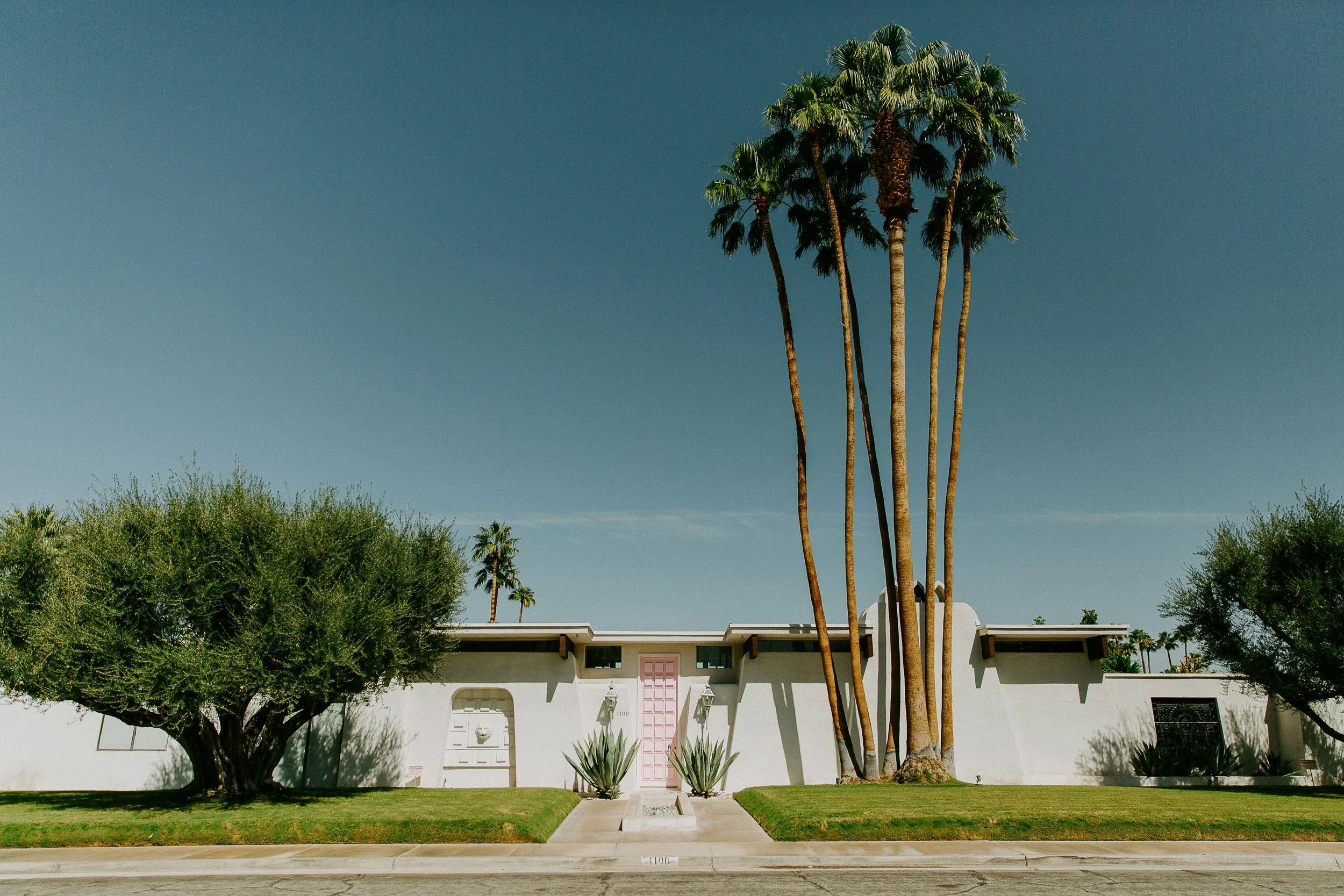
Palm Springs has one of the world's largest concentrations of preserved midcentury modern architecture, and the built environment here is genuinely one of the city's great pleasures. Desert Modernism – the regional style that emerged in the 1940s and '60s – was designed for this climate specifically: clean lines, open plans, floor-to-ceiling glass, butterfly roofs, and the indoor-outdoor flow that makes every well-designed house here feel like a conversation between architecture and landscape.
You don't need a scheduled tour to appreciate it, though the Palm Springs Historical Society's walking tours offer itineraries through the Movie Colony, Frank Sinatra's neighborhood, Rat Pack history, and the Uptown Design District that make the city's glamorous past genuinely tangible. Modernism Week each February turns architecture appreciation into a full cultural festival – and the Palm Springs Art Museum Architecture and Design Center holds its own as a destination independent of any event calendar. Then there is Sunnylands in Rancho Mirage – the former Annenberg estate that once hosted presidents and heads of state, now open for public visiting. Walking its grounds feels like stepping into a particular era of American elegance that Palm Springs embodies better than almost anywhere else.
If You Want Nature
The landscape surrounding Palm Springs is, in the most literal sense, extraordinary. Indian Canyons – the ancestral home of the Agua Caliente Band of Cahuilla Indians – contains some of the largest native California fan palm oases in the world. Hiking into Palm Canyon or Andreas Canyon in the early morning, before the heat builds, is one of those experiences that resets your sense of proportion in the best possible way. Tahquitz Canyon offers a 1.8-mile round-trip hike to a 60-foot waterfall that feels genuinely surprising given the surrounding desert. The Palm Springs Aerial Tramway takes you from desert floor to the alpine environment of Mount San Jacinto State Park in under 12 minutes – arriving at over 8,500 feet where the temperature drops dramatically and the views across the Coachella Valley are breathtaking. For something slower and endearing, Moorten Botanical Garden is a one-acre family-owned cactus sanctuary that has been cultivating rare desert plants since 1938 – quiet, beautiful, and unlike anything else in the valley.

Explore Homes in Palm Springs
Gay Palm Springs Beyond The Bars
Here's the thing about gay Palm Springs that took me a while to fully articulate: the queerness of this city is not isolated to the bars. The bars are wonderful, and they have full articles of their own on this blog. But the queer energy of Palm Springs is distributed through the entire city – through coffee shops and clothing boutiques and restaurants and museum programming and neighborhood conversations and the basic comfort of walking around feeling seen and safe in a way that still, in 2026, is not universal.
With close to 50% of the city's population identifying as LGBTQ+, Palm Springs has the kind of queer critical mass that makes visibility structural rather than performative. This is not a city that is gay-friendly – it is a city that is foundationally LGBTQ+ integrated. The difference is palpable from your first morning here.
For queer culture that doesn't require a cover charge, Cinema Diverse – the Palm Springs LGBTQ Film Festival – brings genuine cinematic quality to the desert through screenings and events that feel nothing like an afterthought. The Palm Springs Art Museum holds LGBTQ+ works in its permanent collection and programs Q+ Art events that bring queer artists and audiences together in one of the most architecturally beautiful museum spaces in Southern California. Drag brunch at various venues has become its own genre of afternoon leisure here: food, performance, laughter, and the particular delight of watching someone absolutely commit to a look at 11 in the morning. Gay Desert Guide maintains one of the most comprehensive LGBTQ+ event calendars in the valley and is worth bookmarking before any trip.
The point is this: you can have a deeply, recognizably gay vacation in Palm Springs and never once feel like you missed anything by skipping the bars. The queerness is in the air here. It shows up in small ways that accumulate into something that feels like home.
Gay by Night in Palm Springs
The patio dinner – at golden hour, when the mountains go from tan to pink to something almost otherworldly – is one of the city's signature pleasures in our opinion and requires absolutely no nightlife participation to enjoy fully.
Copley's on Palm Canyon, set in the former guest cottage of Cary Grant's estate, delivers one of the most memorable patio dining experiences in the desert – candlelit, garden-surrounded, and unhurried in exactly the right way. EightNine brings a sleek, contemporary energy with an outdoor terrace that earns its reputation on warm desert evenings. 1501 Uptown Bistro offers one of the Uptown Design District's most beloved patios – relaxed, neighborhood-feeling, and ideal for a long lunch that quietly becomes dinner. And Miro's rounds it all out with a charming European-inflected menu and an outdoor setting that makes lingering feel like the only reasonable option. Together, they represent a downtown dining scene that punches well above what you'd expect for a city of this size.
A perfect Palm Springs evening can look like this: a late-afternoon walk through the Uptown Design District as the light goes long and golden, dinner on a patio with a mountain view, a stroll down Palm Canyon, and then back to your hotel pool under a sky with more stars than most of us see in a month.
When a Vacation Starts to Feel Like Something More
For many, a Palm Springs trip begins to feel less like a vacation and more like a preview. The morning light through your hotel window. The ease of the airport – small, efficient, ten minutes from downtown. The quality of the produce at the weekly year-round farmers' market. The warmth of the conversations with folks everywhere you go. The comfort of moving through a city where nearly half the population shares your identity and none of that requires explanation.
Greater Palm Springs boasts more than 300 days of sunshine annually, a relaxed pace of daily life, and healthcare infrastructure that specifically serves the LGBTQ+ community through resources like DAP Health and The Center. The real estate market, while it has appreciated meaningfully, still offers value compared to Los Angeles, San Francisco, or New York for buyers with the right budget and vision. Palm Springs as a whole is known for LGBTQ+ visibility and inclusion across all its neighborhoods – and the best fit for any buyer depends on lifestyle, walkability, housing type, and whether the pull is toward quiet residential streets or easy access to downtown energy. That's exactly the kind of conversation worth having with someone who knows the market deeply. 🏡
The non-party version of a Palm Springs trip has a way of revealing the texture of actual life here. The architecture you find yourself photographing. The restaurant you already know you'd return to. The new friends you made playing pickleball. If you start thinking less about the next time you'll visit and more about whether a commute from here is feasible – Palm Springs is very good at making it happen.
TL;DR 😜
Palm Springs is one of the world's most complete LGBTQ+ travel destinations – and the bars are only one part of the story. The city's strongest features (midcentury architecture, canyon hiking, world-class spas, queer culture, extraordinary dining, and a built-in sense of community and safety) are available sunrise to sunset, year-round, with or without a drink in your hand. Whether you're sober, slowing down, romantically inclined, culturally hungry, or simply done with staying out past midnight, Palm Springs has more than enough to make every hour here feel well-spent.
Your Frequently Asked Questions
Q: Is Palm Springs worth visiting if you don't drink or party?
A: Absolutely. The city's strongest non-nightlife assets include desert canyon hiking, Indigenous-owned mineral spa experiences, midcentury modern architecture tours, LGBTQ+ film festivals, drag brunches, fine dining, museum programming, and poolside resort relaxation. With nearly 50% of residents identifying as LGBTQ+, Palm Springs offers a level of queer visibility and community that makes the destination exceptional regardless of nightlife preference.
Q: What can you do in Palm Springs during the day besides pool parties and bars?
A: Visitors have a full calendar of daytime options: the Palm Springs Art Museum, Agua Caliente Cultural Museum, Indian Canyons, Tahquitz Canyon, the Palm Springs Aerial Tramway, Moorten Botanical Garden, the Uptown Design District, self-guided midcentury architecture tours, VillageFest on Thursday evenings, Sunnylands in Rancho Mirage, and the Spa at Séc-he. Palm Springs is unusually strong during daylight hours compared to most nightlife-driven destinations.
Q: Is Palm Springs a good destination for sober or sober-curious travelers?
A: Yes – genuinely. The wellness infrastructure in Greater Palm Springs is among the strongest of any American resort destination, encompassing the mineral spring-based Spa at Séc-he, resort spas, float therapy, yoga studios, sound baths, and a robust outdoor activity culture built around desert hiking, pickleball, and the Aerial Tramway. The city's year-round sunshine and LGBTQ+ community fabric make it welcoming to travelers of any relationship with alcohol.
Q: If I love Palm Springs without the party scene, should I consider relocating?
A: It's worth exploring. Loving the quieter, more textured version of Palm Springs – the morning light, the community, the restaurants, the trails – often reflects a genuine attraction to the everyday lifestyle rather than just the vacation energy. Greater Palm Springs offers more than 300 sunny days annually, dedicated LGBTQ+ healthcare resources, airport convenience through Palm Springs International, and a real estate market that still offers meaningful options unavailable in larger coastal cities. Comparing neighborhoods by budget and lifestyle, testing different seasons, and speaking with a local expert are the right first steps.
A Final Word from the Desert ☀️
Gay Palm Springs has always been more than one thing. It has always been the clubs and the canyons, the drag shows and the dawn hikes, the pool parties and the pool naps, the Arenas District for happy hour on a Friday and the farmers' market on a Saturday morning. The city doesn't ask you to choose between versions of yourself. It makes room for all of them.
Year-round, the weather here is a genuine gift – warm winters ideal for hiking and heated pools, springs that arrive with wildflowers, summers that reward early risers and spa enthusiasts, and falls that bring Pride, film festivals, and the first cool mornings that make the desert feel renewed. In every season, the mountains are there. In every season, the light is extraordinary.
Making new friends here is also, frankly, seamless. There's something about the openness of this community – where nearly half your neighbors share your identity and the culture has been shaped by decades of chosen family – that makes connection feel natural rather than effortful. People talk to each other here. Strangers become regulars. Visitors become residents.
What's your favorite thing to do in Palm Springs beyond the bars? Share your experiences!
If you’re curious to learn more about all the fun you can have here in Palm Springs and our beautiful Coachella Valley, check out some of our blog favorites, like:

Thinking About Buying, Selling, or Relocating to Palm Springs?
Glen Nadeau – one half of The Palm Springs Guys – is a top-producing Palm Springs Realtor known for his no-pressure, highly informed approach.
If you’re just starting to explore or simply have questions, you’re always welcome to reach out.
👉 Visit Modern Living Palm Springs or contact Glen directly.
📱 Call/Text: 805-220-8097 | ✉️ glen.nadeau@compass.com
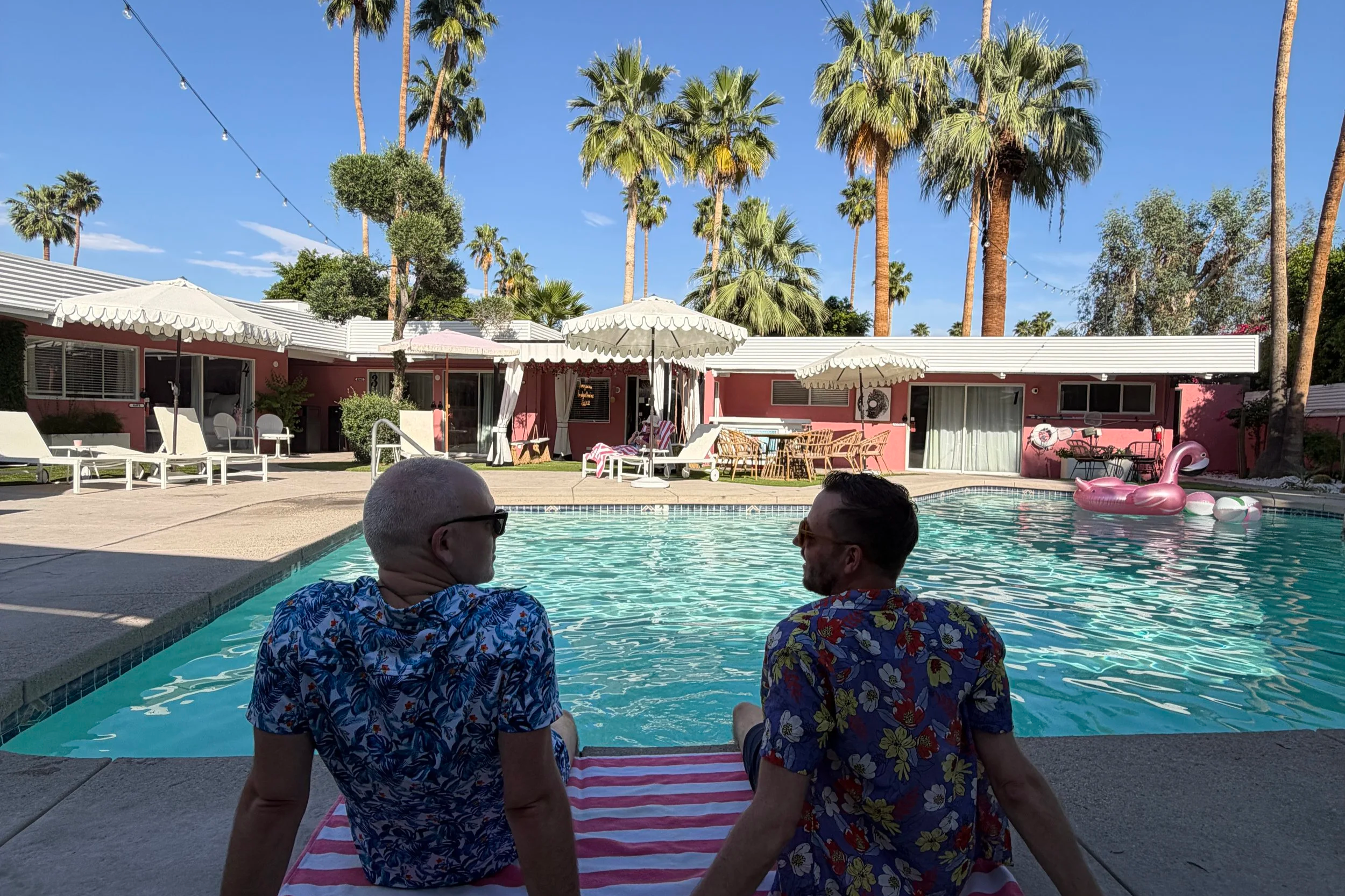
Palm Springs vs. Everywhere Else: Why LGBTQ+ Travelers Keep Choosing the Desert
Gay Palm Springs is probably the safest LGBTQ+ travel destination in the U.S. Discover why nearly 50% of residents identify as LGBTQ+ and why gay men never want to leave.
There are cities that hang a rainbow flag during Pride Month, and then there's Palm Springs. The difference is not a matter of degree – it's a matter of identity. In most places, the LGBTQ+ community exists somewhere within the city or concentrated in a neighborhood. In Palm Springs, the LGBTQ+ community largely is the city. And once you've spent even a weekend here, you feel that distinction in a way that's genuinely hard to articulate but impossible to miss. 🌴
For gay men, particularly those navigating a national political climate that has grown increasingly hostile, Palm Springs has become something more than a great vacation. It's become a reference point – a living, breathing reminder of what it feels like to belong somewhere completely, and without asterisks.
Whether you're planning your first gaycation or your fifth return trip, here is our local take on what makes this desert city so singular, so safe, and so joyfully, unapologetically ours.
What makes Palm Springs so safe and welcoming for LGBTQ+ travelers?
Palm Springs, California is widely regarded as the safest and most welcoming LGBTQ+ travel destination in the United States. An estimated 40–50% of its permanent population identifies as LGBTQ+, giving the city the highest queer per-capita concentration of any American city. Palm Springs has a long history of LGBTQ+ representation in local government – including America's first all-LGBTQ+ city council, sworn in in 2017 – and consistently earns a perfect score of 100 on the Human Rights Campaign's Municipal Equality Index. The city is a designated sanctuary for transgender individuals and drag performers, and its police department maintains dedicated LGBTQ+ liaison officers. California's strong statewide protections, combined with Palm Springs' culture of genuine inclusion, make it a uniquely values-aligned destination for gay men seeking safety, community, and an exceptional quality of life.
The Numbers That Tell the Story
Let's start with context, because the numbers here are genuinely remarkable and worth sitting with for a moment.
According to Gallup's most recent data, approximately 7.6% of U.S. adults identify as LGBTQ+. California runs higher than the national average at roughly 8.3%. And Palm Springs conservative estimates put the LGBTQ+ population at somewhere between 40% and 50% of the city's total residents – a statistic worth repeating – with some local estimates suggesting it may be even higher among residents over 18. Gallup's U.S. LGBTQ+ identification research provides the national baseline that makes this contrast so striking.
This is not a "gay neighborhood" in the traditional sense. This is an entire city where queer life is the norm, not the exception. Walk down Palm Canyon Drive or any neighborhood in town – on a Tuesday afternoon and you'll understand the difference almost immediately. Every neighborhood is a gayborhood. Nobody is performing visibility here. It's simply the texture of daily life.
That density of community creates something that's difficult to manufacture and impossible to fake: a city where same-sex couples hold hands at brunch without a second thought, where rainbow flags aren't seasonal décor, and where the phrase "gay-friendly" feels almost quaint in its understatement.
Government That Actually Represents Its People
The safety in Palm Springs isn't accidental, and it didn't happen overnight. It was built – deliberately, incrementally, and with genuine political will – over decades of layered LGBTQ+ history and eventually civic leadership.
The city's history of government representation is remarkable by any standard. In 2004, Ron Oden was elected mayor of Palm Springs, making history as the first openly gay African-American mayor of an American city. In December 2017, Palm Springs made national headlines by swearing in America's first all-LGBTQ+ city council – a milestone that sent a message not just to its residents, but to the entire country. Then in December 2019, Lisa Middleton was sworn in as mayor of Palm Springs, becoming the first openly transgender mayor in California history. The Guardian covered the 2017 milestone in depth, and it remains one of the most cited moments in the city's political legacy.
These aren't footnotes. They are the foundation of why Palm Springs feels the way it does. When your city's leadership reflects who you are, it changes how safe you feel to live there – and how seriously your needs are taken at every level of local government.
That institutional commitment shows up practically as well. The City of Palm Springs consistently earns a perfect score of 100 on the Human Rights Campaign's Municipal Equality Index, which evaluates how inclusive a city's laws, policies, and services are for LGBTQ+ residents. The Palm Springs Police Department maintains active LGBTQ+ Outreach Committee officers and designated community liaisons, building trust between law enforcement and residents in a way that many cities simply haven't prioritized. And in direct response to national legislative attacks, Palm Springs has officially declared itself a sanctuary city for transgender individuals and drag performers seeking healthcare and protection.
What the Rest of the Country Looks Like Right Now
To fully appreciate why Palm Springs resonates so deeply with gay travelers in 2026, it helps to understand what they're often traveling from.
The national picture for LGBTQ+ Americans is, to put it plainly, unsettling. The ACLU tracked over 500 anti-LGBTQ+ bills introduced in state legislatures in a recent reporting year. The Human Rights Campaign declared a formal "National State of Emergency for LGBTQ+ Americans" in response to the unprecedented volume of discriminatory legislation, much of it targeting transgender people in particular. GLAAD's ALERT Desk documented more than 2,600 anti-LGBTQ+ incidents nationwide in a single year – a 26% increase from the year prior, with a significant spike during Pride Month of all times. And a SafeHome.org study found that 54% of LGBTQ+ adults had avoided a public space out of fear of discrimination or violence, with nearly a third actively considering moving to a different state.
These statistics are not abstractions for the people living them. They are the daily context that shapes how gay men move through the world in most of the country – a kind of low-grade hyper-vigilance that, once you've arrived in Palm Springs, you suddenly realize has been with you the whole time. Because here, it lifts noticeably, and almost immediately.
California consistently earns an "A" grade on LGBTQ+ state safety report cards. Palm Springs – even within California – is its own category. The contrast with hostile state climates is so significant that the city has quietly become a destination for what many in the community call "climate refugees": LGBTQ+ individuals and couples relocating from places where the political environment has become untenable. For those with the means to make that move thoughtfully, Palm Springs increasingly represents not just a vacation destination, but a values-aligned place to plant roots.
Explore Homes in Palm Springs
The Social Scene – Where Safety Becomes Belonging
Statistics and government policy create the architecture of safety. What fills it is community – and Palm Springs has built one of the most genuinely connected LGBTQ+ social ecosystems anywhere in the country.
The Arenas District remains the heartbeat of gay nightlife: a concentrated stretch of locally-owned bars, clubs, and restaurants where the LGBTQ+ community gathers with an ease and openness that feels distinctly its own. Hunters Nightclub, Streetbar (the oldest gay bar in the city, open since 1991), Chill Bar, Quadz, and Blackbook each bring their own personality to the district, and bar-hopping between them on a Friday night is one of those experiences that doesn't require any prior planning to become a great memory.
Beyond Arenas, the social culture in Palm Springs extends into nearly every corner of the city. The Warm Sands neighborhood is home to a cluster of men-only clothing-optional resorts – more gay men's resorts per capita than anywhere else on earth – where guests socialize naturally, without judgment, in environments designed for exactly this kind of ease. The gay men's pickleball scene has become its own institution, with multiple organized groups welcoming all skill levels and offering one of the best low-pressure ways to meet locals that we've ever encountered.
Our own monthly Palm Springs Guys Happy Hour Socials rotate across venues throughout the city, and they've become something of a proving ground for what Palm Springs does best: turning strangers into genuine friends with remarkable speed. Visitors and residents mix naturally at these events, and the conversations that start over a cold drink on a patio often continue for years. 👨🏼🤝👨🏻
What distinguishes Palm Springs socially isn't just the volume of LGBTQ+-specific spaces – it's the quality of inclusion embedded in nearly every mainstream space as well. Most restaurants, shops, galleries, and hotels in the city are genuinely, un-performatively welcoming. This is a city where the queer community doesn't cluster in a protected pocket – it's spread throughout, woven into the fabric of ordinary life. That's the "gayborhood effect" at city scale, and there's simply nowhere else quite like it.
The Practical Safety Infrastructure
Palm Springs is safe in ways that are institutionally supported and thoughtfully maintained as well.
DAP Health, formerly known as Desert AIDS Project, has evolved into one of the most comprehensive LGBTQ+ health organizations in the American Southwest. It offers primary and specialty care, behavioral health services, HIV/STI prevention and treatment, and a wide range of community programs – providing a healthcare safety net that matters deeply to LGBTQ+ residents and visitors alike. The LGBTQ Community Center of the Desert complements this with social services, advocacy, and programming that reinforces the city's built-in community infrastructure.
Beyond healthcare, the practical day-to-day experience of being LGBTQ+ in Palm Springs is simply different from most places. Public displays of affection between same-sex couples are not just tolerated – they are entirely unremarkable. You are not an anomaly. You are not the headline. You are just a person enjoying happy hour, which, if you've spent any time in less affirming environments, is a more radical gift than it sounds.
A Gentle Word About the Longer Picture
We want to say this as plainly and gently as we know how: Palm Springs is wonderful to visit. It's even better to live in.
For gay men who find themselves on their second or third trip here, doing the quiet math of what it might mean to stay longer – that instinct is worth listening to. The real estate market here includes mid-century modern gems, architecturally significant properties, and luxury homes that attract buyers who have stopped settling for "fine." The community infrastructure, the climate (300+ days of sunshine annually), and the quality of daily life in Palm Springs are the kinds of things most people only access on vacation – and a growing number are deciding they'd rather have it year-round.
Nobody is pushing you toward any decision. Palm Springs has a way of making its case on its own timeline, which is usually sometime around Day 3 of a really good trip. We've watched it happen more times than we can count. 😎
TL;DR 😜 Why Palm Springs Is the Safest, Most Welcoming LGBTQ+ Destination in America
Palm Springs, California has an estimated 40–50% LGBTQ+ population – the highest per-capita concentration of any American city. That’s a game-changing statistic worth shouting from the rooftops! The city has a history of LGBTQ+ "firsts" in government, including America's first all-LGBTQ+ city council (2017) and California's first transgender mayor (2019). It earns a perfect score of 100 on the Human Rights Campaign's Municipal Equality Index, maintains dedicated LGBTQ+ police liaisons, and has declared sanctuary status for transgender individuals and drag performers. Against a national backdrop of rising anti-LGBTQ+ legislation, hate incidents, and declining acceptance, Palm Springs represents a genuinely singular safe haven – legally protected, culturally affirming, and deeply community-rooted.
FAQ – Palm Springs LGBTQ+ Travel
Is Palm Springs actually safe for gay couples to show public affection?
Absolutely – and in a way that goes well beyond policy. With nearly half the city identifying as LGBTQ+, public affection between same-sex couples is completely ordinary here. Walking hand-in-hand down Palm Canyon Drive, dining in the Uptown Design District, or exploring the Arenas District, you are surrounded by community. Nobody stares. Nobody flinches. That normalcy is the point – and it's one of the most naturally radical things about daily life in Palm Springs.
When is the best time of year to visit Palm Springs as a gay traveler?
The prime season runs from October through May, when desert weather is at its best – sunny days in the 70s and 80s, comfortable evenings, and a full calendar of major LGBTQ+ events. Greater Palm Springs Pride in November draws over 100,000 attendees. February brings Modernism Week, Coachella Music Festival in April – and Summer (June–September) delivers triple-digit heat but also lower rates, pool culture in full swing, and vibrant air-conditioned nightlife for those who know how to work the season.
What makes Palm Springs different from other gay-friendly destinations?
Most "gay-friendly" cities have a neighborhood. Palm Springs has a whole city. The LGBTQ+ community doesn't exist within Palm Springs – it governs it, owns it, built it, and continues to shape it. Between the political representation, the concentration of gay-owned businesses and resorts, the healthcare infrastructure, and the social density, Palm Springs offers a quality of belonging that has no true equivalent anywhere else in the country.
Is Palm Springs a good option for LGBTQ+ individuals considering relocation?
Palm Springs has become a top destination for LGBTQ+ "climate refugees" leaving volatile political and seasonal environments. California's strong state-level protections, combined with the city's community infrastructure – including DAP Health, the LGBTQ Community Center of the Desert, and a deeply integrated queer social fabric – make it one of the most supported places in the country to land. The cost of living is higher than the national average, primarily driven by housing, but generally more accessible than major coastal California cities. For buyers in the $800K+ range, the market here rewards thoughtful timing and local expertise.
Come for the Sunshine. Stay for the Belonging.
Gay Palm Springs is not a trend. It is not a moment. It is a decades-long, community-built, politically-backed, architecturally-framed argument for what it looks like when a city genuinely values its LGBTQ+ residents – and visitors who arrive here for the first time tend to feel that argument land in their bones before they can articulate it.
The weather alone is worth the trip: October through May delivers near-perfect desert conditions, with warm sunny days, cool to warm evenings, and the kind of blue sky that makes everything feel more possible. Summers run hot, but they come with their own pleasures – private resort days, low season rates, and a city that briefly gives itself back to those who know it best.
More than the weather, more than the mid-century modern architecture, more than the steadfast gay nightlife and the resorts and the extraordinary restaurant scene – what gay men consistently report after their first trip to Palm Springs is how easy it was to make friends here. How quickly a conversation at a pool bar became an actual connection. How natural it felt to walk into a room and belong. That social ease is not a coincidence. It is the direct product of a community that has been building this place, with intention and love, for a very long time.
And for those who find themselves wondering, somewhere around day three, whether a place like this could actually become home – welcome to the beginning of a very energizing conversation. 🏳️🌈
Question for you: With so much happening politically across the country right now, how has it changed the way you choose where to travel or where to plant roots?
For related reading, check out these articles from The Palm Springs Guys blog:
How Palm Springs Became the Safest LGBTQ+ Place in America – the deeper history behind the city's safety record.
Curious About Moving to Gay Palm Springs? What We Hear Most – the honest, locals-only answers to the questions that come up around Day 3 of every great trip.
How Gay Men Actually Spend a Week in Palm Springs (Not the Brochure Version) – where the safety and community described in this article shows up in practice, day by day.
Palm Springs: What's Iconic, What's Changed, and What Still Matters – a broader look at the city's evolution and why the LGBTQ+ community remains at its core.
5 Things We Always Tell Gay Friends Visiting Palm Springs for the First Time – essential reading before you pack.
Thinking About Buying, Selling, or Relocating to Palm Springs?
Glen Nadeau – one half of The Palm Springs Guys – is a top-producing Palm Springs Realtor known for his no-pressure, highly informed approach.
If you’re just starting to explore or simply have questions, you’re always welcome to reach out.
👉 Visit Modern Living Palm Springs or contact Glen directly.
📱 Call/Text: 805-220-8097 | ✉️ glen.nadeau@compass.com

How Gay Men Actually Spend a Week in Palm Springs (Not the Brochure Version)
Discover how gay men actually spend a week in Palm Springs. Clothing-optional resorts, epic nightlife, world-class dining & an LGBTQ+ community unlike anywhere on earth. 🌴
You've seen the glossy version: the perfectly lit poolside photo, two guys laughing effortlessly in matching swimsuits while a waiter delivers cocktails nobody ordered. Beautiful – but the real week in gay Palm Springs is so much better.
A week in gay Palm Springs is waking up at a men-only resort where you can wander to breakfast without a second thought about who's watching or what they might think. It's a Sunday afternoon that starts at a patio brunch and ends somewhere you genuinely didn't plan to be – in the best possible way. It's spending four days in a city where the LGBTQ+ community doesn't just feel welcome; it effectively runs the place. According to National Geographic, nearly half of all Palm Springs residents over the age of 18 identify as LGBTQ+, and that number is felt in every coffee shop, storefront, and restaurant in town.
There is genuinely nowhere else quite like this for gay men who want to fully exhale for a week. Here's what that week actually looks like. 🌴
What is the best way for gay men to spend a week in Palm Springs?
In short, a full week in gay Palm Springs typically includes staying at one of the city's men-only clothing-optional resorts in the Warm Sands neighborhood, spending afternoons at pool day passes or exploring the CV Link by bike, dining at renowned restaurants in the Uptown Design District and downtown Palm Springs, enjoying nightly entertainment along Arenas Road's gay bar district, and attending signature events like Modernism Week or Palm Springs Pride. With nearly 50% of the local population identifying as LGBTQ+, Palm Springs offers a level of community safety and authentic queer culture that is simply unmatched anywhere else in the country.
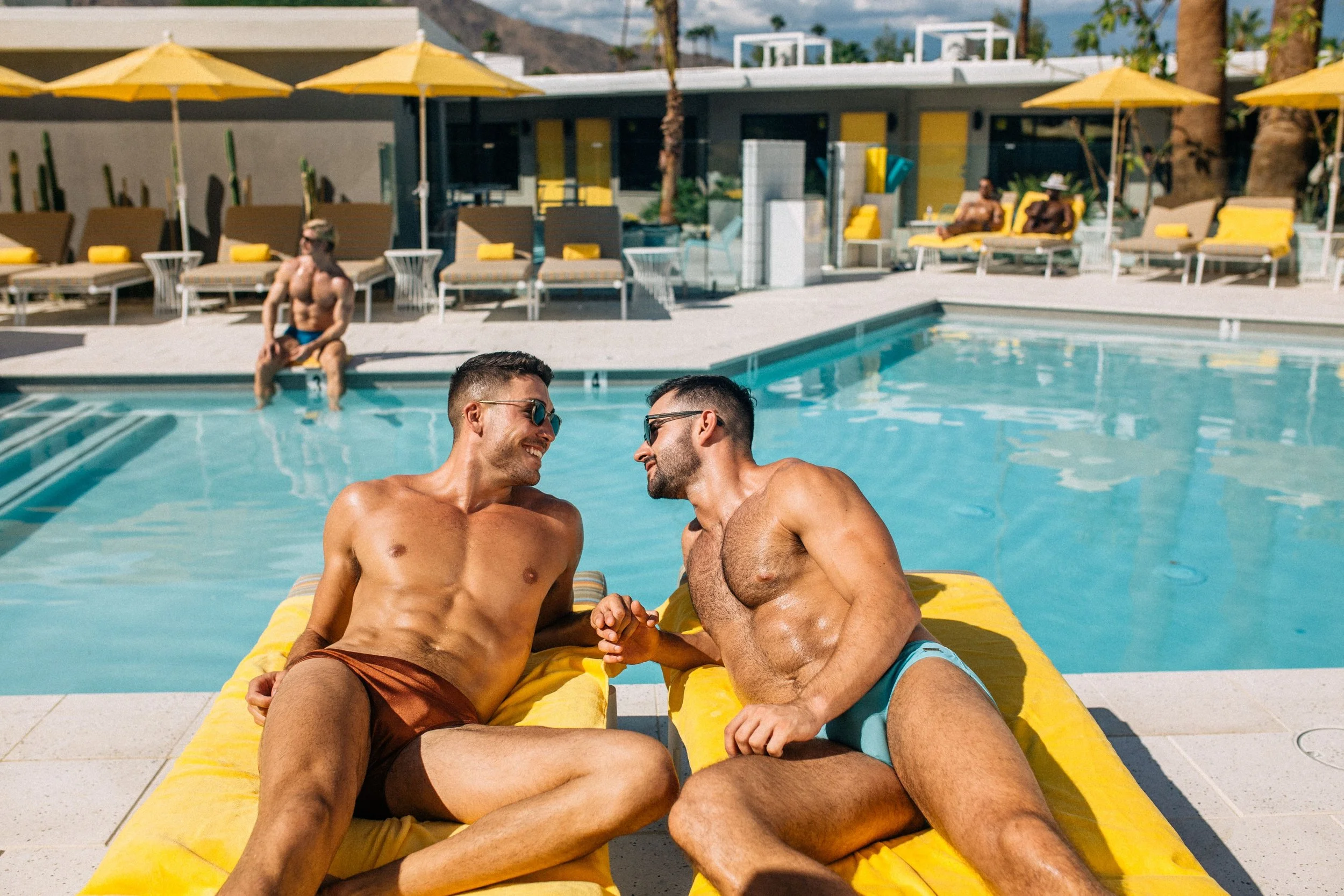
Checking In – The Resort Experience
Palm Springs has more gay men's resorts per capita than anywhere else on earth. Let that land for a second. We're not talking about "gay-friendly" hotels with a rainbow flag by the front entrance. We're talking about an entire neighborhood – the Warm Sands district – dedicated to men-only resorts, each with its own distinct personality and culture.
For first-timers or those who prefer their getaway on the more serene side, properties like Santiago Resort and Descanso offer a genuinely elegant experience: saltwater pools, lush gardens, breakfast included, and a vibe that feels more like a private estate than a hotel. These are the resorts where you decompress, read a novel while you’re naked by the pool, and wonder why you haven't done this sooner.
On the other end of the spectrum, CCBC Resort Hotel in Cathedral City sits on 3.5 acres and operates with an energy that is unmistakably all-hours and unapologetically adventurous. Casa Oliver – formerly All Worlds Resort – offers day and night passes and caters to a crowd that's come to fully participate in what Palm Springs liberated resort culture does best.
The spectrum from mild to wild is a genuine differentiator here. Most resorts are clothing-optional, but "optional" is exactly that. Nobody is keeping score on whether you've dropped your swimsuit, and nobody is judging you for keeping it on. The only agenda is yours.
For a deeper look at how to find your perfect match, our guide Mild to Wild: How to Choose the Right Gay Clothing-Optional Resort in Palm Springs Based on Your Vibe walks through the full lineup.
Gay By Day – Pools, Pickleball & Patios
Pool Culture & Day Passes
One of the more delightful quirks of Palm Springs gay culture is that the pool scene extends well beyond your own resort's gates. Several men-only properties offer day passes, which means you can spend a Monday at Casa Oliver (10 AM–6 PM, around $25, with heated pool, hot tub, showers, and fire pit) and a Thursday at Desert Paradise Resort with its saltwater pool, jacuzzi, and steam room. Casa Oliver also runs a Tuesday "Local Social Day Pass" specifically designed for residents and visitors to mingle – an underrated gem for meeting people organically.
The day pass concept is uniquely Palm Springs. It turns pool time into a social ritual rather than just a place to get sunburned.
Active Recreation
Beyond the pool deck, pickleball has become the unofficial social sport of choice for gay men in Palm Springs, and with good reason. The Gay Men of Palm Springs Pickleball Group (searchable on Facebook) and the Palm Springs Queer Pickleball Club (Instagram: @ps.queer.pb.club) both run weekly open-play sessions that are genuinely welcoming to all skill levels. If you've been looking for a low-pressure way to meet locals – guys who actually live here – showing up to one of these is more effective than any app.
For the hikers and cyclists, the CV Link pathway offers a paved multi-use route beginning at the Palm Springs Visitor Center that stretches 13+ miles through the desert valley. Great Outdoors Palm Springs (GOPS) and other groups also organize regular LGBTQ+ hikes in the local mountains, with over 1,000 members, though it's worth noting that summer hike schedules are typically suspended during the more extreme heat months.
Socializing and Sipping
If you look away from your Grindr and Sniffies apps for long enough, you’ll find that the ritual of the Palm Springs happy hour (aka meeting people in real time) deserves its own appreciation. Between nightly happy hours in the Arenas district (aka the gayborhood) and our own Palm Springs Guys monthly rotating happy hour social – which moves from venue to venue across the city – there's always a reason to be somewhere with a cold drink in hand. These events are more than just an excuse to drink on a patio. They're a strong part of how the gay community actually celebrates its longstanding connective tissue. Whether you're visiting for a week or quietly considering a longer stay, showing up to one of these socials is a fast way to connect here. 👨🏼🤝👨🏻
Dining – Hotspots & Hidden Gems
Palm Springs dining is becoming one of the more seriously good restaurant scenes in Southern California. The city punches above its weight these days, and gay travelers who spend the whole trip eating poolside are missing half the experience.
The established anchors are worth every word of their reputation. EightNine Restaurant & Lounge in the Uptown Design District is a 5-star rated institution with one of the best heated outdoor patios in the desert – dog-friendly, colorful atmosphere, and reliably excellent. Workshop Kitchen & Bar holds a two-time Michelin recognition and a James Beard Award, with Chef Michael Beckman's wood-burning grill serving farm-to-table California cuisine that is among the finest in the entire Coachella Valley. For something more intimate, Clandestino brings the elegance of a 1950s Mexico City dining room to Palm Canyon Drive, and Il Corso (Palm Springs) delivers genuine Sicilian hospitality with homemade pasta and wood-oven pizza that will have you making a reservation for the next night before you've finished the first.
For the evenings when you want something a little more discreet and atmospheric, the city has built an impressive collection of speakeasy-style venues. Counter Reformation, tucked within the Parker Palm Springs hotel, seats roughly 20 people and transports you entirely. The Tailor Shop in Uptown features velvet banquettes, leather chairs, and a striking marble bar purpose-built for lingering. The lounge at The Velvet Rope boutique hotel in Old Las Palmas offers crafted cocktails and jazz at sunset with the kind of Old Hollywood elegance that feels genuinely earned rather than manufactured.
Our newest favorites on the block include Beaton's at Bar Cecil, Ash & Vine (set in a 1936 bungalow in La Plaza, open daily for brunch and dinner), and Bar Issi inside the Thompson Hotel are all worth knowing.
For more on that front, check out our article Hot & Delicious: 5 New Palm Springs Openings You Need To Try. And for those perfect date-night suggestions, our guide Date Night, Upgraded: Palm Springs' Most Romantic Speakeasy Bars has everything you need.
Explore Homes in Palm Springs
Gay By Night – Arenas District & Beyond
When the sun drops behind the San Jacinto Mountains (which is always stunning to see) and the desert air finally cools to something humane, Arenas Road comes alive in a way that's distinctly, joyfully its own. This is the gay district of downtown Palm Springs – a stretch of locally-owned bars that celebrate Pride on a nightly basis.
Hunters is a classic anchor of Arenas with drag shows, karaoke, and its legendary happy hour that starts at 10 AM (if you must). Chill Bar brings drag bingo, go-go boys, and an unrivaled disco ball aesthetic that makes even the most cynical among us smile. Streetbar has been pouring strong cash-only drinks since 1991 and has the cabaret personality to prove it. Quadz leans into an irresistible singalong culture built around classic and obscure music videos. Dick's on Arenas handles the cruise bar territory with confidence and opens at 6 AM on weekends, which is a sentence that exists. But we suggest you start at Blackbook and go from there. They’ve got a great bar that makes it easy to strike up conversations – and some of the best bar food in town.
Beyond Arenas, Palm Springs' nightlife extends well past the district. Tool Shed on Sunny Dunes Road is the city's only leather and Levi bar – and its Thursday “Underwear Night” has become a genuine institution. Club 541 is the Coachella Valley's only dedicated sex club, operating Thursday through Sunday at $28 entry. For those who want the full after-dark Palm Springs experience, our piece on Best Gay Nightlife in Palm Springs covers the complete current landscape.
And then there are ongoing events like “CumUnion” at CCBC – a monthly event that draws visitors from across the country to the CCBC Resort in Cathedral City for what is consistently recognized as one of the world's largest recurring sex parties. Themed play areas, pool, jacuzzi, waterfalls, and a winding cruising walk through the resort's 3.5 acres.
The Secret Sauce – Why We Never Want to Leave
Here's the thing about Palm Springs that the brochure doesn't quite capture, no matter how good the photography is: the city doesn't just feel gay-welcoming. It feels gay-governed. And there's a meaningful difference.
This is a city with a long history of LGBTQ+ political representation, a representing LGBTQ+ city council, and a community infrastructure of gay-owned businesses, resorts, and cultural institutions that has no true equivalent anywhere in the country. As a welcoming LGBTQ+ travel destination, Palm Springs has been consistently recognized for what the community here has built together over decades.
What that feels like in practice is holding your partner's hand walking to brunch and not thinking about it. Being the main character at the Saturday morning farmer's market. Striking up a conversation with the couple at the next table and discovering, two glasses of wine later, that you've made actual friends. That last part happens more here than anywhere we've ever been. The social culture is genuinely open in a way that tends to surprise first-time visitors.
And quietly, for those of us who have spent enough weeks here to start doing math – the part where you ask yourself what it would actually cost to stay longer, or perhaps not leave at all – Palm Springs rewards that curiosity. The real estate market here offers mid-century modern gems, luxury condos, and architecturally significant properties that attract buyers who have stopped settling for "fine." Most gay men know what we mean by settling because many of us have had a lifetime of experience with settling for less. Those who have read our piece Palm Springs Real Estate: Why Palm Springs is THE Place to Live Your Best Gay Life tend to leave with more questions than they arrived with – which we consider a good sign.
To understand more about what makes this city so uniquely safe and affirming for our community, How Palm Springs Became the Safest LGBTQ+ Place in America tells the full story. And when the curiosity becomes something more specific, Curious About Moving to Gay Palm Springs? What We Hear Most is exactly what it sounds like. 😎

TL;DR 😜The Real Gay Palm Springs Week at a Glance
Stay at a men-only resort in Warm Sands (Santiago for serene; CCBC for adventurous). Spend mornings at the pool or on the CV Link. Do a day pass at Casa Oliver on a Tuesday – it's a social event as much as a swim. Eat at EightNine, Workshop Kitchen & Bar, and at least one speakeasy. Walk Arenas Road on a Friday night, hit Tool Shed on Thursday, and check the CumUnion calendar if that's your scene. Sign up for pickleball. Show up to a PSG happy hour. By day three, you will have made at least one new friend. By day five, you will have googled real estate. We've seen it happen. 🏳️🌈
Frequently Asked Questions About Visiting Gay Palm Springs
Is Palm Springs really as gay as people say?
Yes – and possibly more so. Palm Springs is consistently cited as one of the gayest cities in America and ranks among the highest LGBTQ+ per-capita populations in the world. Estimates place the LGBTQ+ community at 40–50% of the city's residents. The city has a fully LGBTQ+ city council, a rich queer history dating to the mid-20th century, and an infrastructure of gay-owned businesses, resorts, bars, and cultural events that is simply unmatched anywhere else in the country.
When is the best time to visit Palm Springs as a gay traveler?
Peak season runs from October through May, when temperatures are sunny and mild – typically in the 70s–85°F range. This is when most major gay events occur, including Palm Springs Pride in November, Modernism Week in February, Bear Week, and various pool parties in spring. Summer (June–September) brings triple-digit heat, but also lower hotel rates, summer pool parties, and a more laid-back local crowd. Early morning outings, patio dining under misters, and air-conditioned resort days are the summer strategy.
Are all gay resorts in Palm Springs clothing-optional?
Most men-only resorts are clothing-optional, but "optional" is genuinely operative. You are never required to be nude. The spectrum ranges from relaxed and romantic (Santiago Resort, Descanso) to adventurous and uninhibited (Casa Oliver, CCBC). First-timers should embrace the experience at whatever comfort level feels right – the culture is welcoming at every point on that spectrum.
What if I love visiting Palm Springs and want to actually live here?
You are not alone, and you won't be the first person to come for a vacation and leave with a real estate question. Palm Springs offers stunning mid-century modern homes, luxury condos, and architecturally significant properties – with the added reality of 300+ days of sunshine a year, a fiercely supportive LGBTQ+ community, and a quality of life that most people only access on vacation. For buyers in the $800K+ range, the market here rewards thoughtful timing.
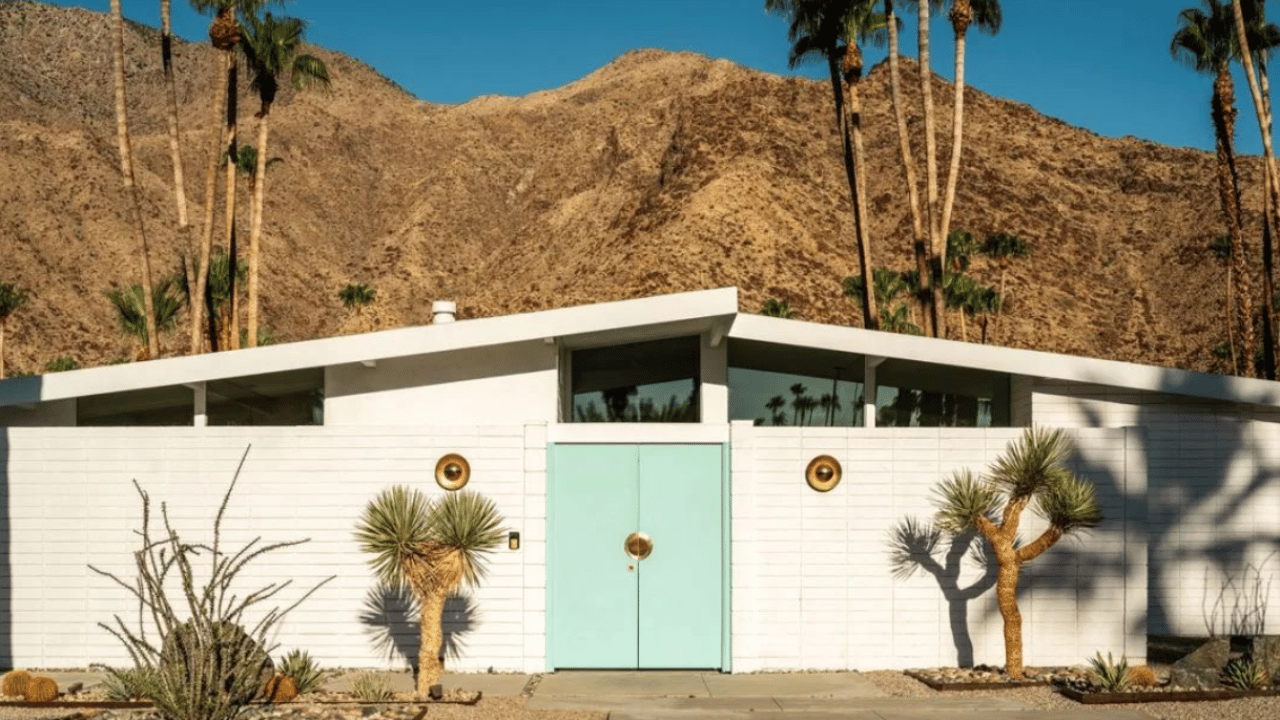
Come for the Week. Stay for Longer.
If Palm Springs had a tagline that cut closer to the truth than any tourism board would print, it might be something like: you thought you were coming for a vacation, and you ended up reconsidering your whole life. Said with love.
The year-round calendar here means there is never a wrong time to visit, only different versions of a similar great story. The winters are warm, the summers are beautifully dramatic (in the best desert way), and the shoulder seasons in spring and fall might be the most beautiful weeks of sun you've ever experienced.
More than the events, the architecture, the restaurant scene, or even the resort culture, what gay men tend to remember most about their first full week in Palm Springs is how easy it was to belong here.
For first-time visitors, our article 5 Things We Always Tell Gay Friends Visiting Palm Springs for the First Time is a good companion read before you pack.
See you soon in the desert! 😎
What was the highlight of your first gaycation to Palm Springs (or haven’t you been here yet)? Share your experiences with us.
Thinking About Buying, Selling, or Relocating to Palm Springs?
Glen Nadeau – one half of The Palm Springs Guys – is a top-producing Palm Springs Realtor known for his no-pressure, highly informed approach.
If you’re just starting to explore or simply have questions, you’re always welcome to reach out.
👉 Visit Modern Living Palm Springs or contact Glen directly.
📱 Call/Text: 805-220-8097 | ✉️ glen.nadeau@compass.com

Modernism Week: A Queer Eye on Palm Springs’ Mid-Century Obsession
Gay Palm Springs + mid-century modern architecture = Modernism Week magic. Explore the queer legacy, iconic homes & why gay men keep coming back.
Locals in Palm Springs know we’re a city that celebrates mid-century modern architecture all year, because we are living it 365 days a round. But Modernism Week is our most coveted signature annual event, held every February in the heart of the California desert – and again (but a much smaller version) every October.
Modernism Week is the world-renowned celebration of Midcentury architecture, design and culture. It draws over 100,000+ attendees annually for its 10-11 day February festival, and features over 500 events. It features tours of iconic homes like Frank Sinatra’s "Twin Palms" and the Edris House, the Palm Springs Modernism Show, and their signature double decker architectural bus tour. From tours and parties to talks and walks, it's smart, sophisticated, inspiring – and it has long been deeply, unapologetically queer, even in the shadows. 🏳️🌈
For gay men planning a Palm Springs getaway, Modernism Week is a front-row seat to cultural curiosity and the city's heartbeat. The aesthetically pleasing clean lines and open floor plans of Desert Modernism tell a story about who built this place, who claimed it, and who keeps coming back. We wouldn't have it any other way!
A Desert Love Affair: How Palm Springs and Modernism Found Each Other
Palm Springs' relationship with modernist architecture began in the 1920s, though it didn't truly hit its stride until the post-war boom of the 1940s and 50s. Since the city is blessed with year-round sunshine, flat desert terrain, and a steady stream of Hollywood's most design-forward clientele – it naturally became the ideal laboratory for a new way of building and living.
Architects like Albert Frey, Richard Neutra, John Lautner, and Donald Wexler were hired and got to work – simply because they were the “best” in the business at the time. For them, Palm Springs became their modernism canvas.
They began designing homes and civic buildings that did something radical through refusing to compete with the landscape. Instead, they invited it in. Floor-to-ceiling glass walls framed the San Jacinto Mountains. Roof overhangs tracked the arc of the desert sun. Swimming pools weren't just amenities – they were architectural gestures.
The result was a city that looked, and still looks, like nowhere else on earth. When mid-century modern fell out of fashion elsewhere in the 1970s and 80s, Palm Springs held onto it – partly by necessity, partly by instinct, and partly because the people who loved it most were not about to let a good thing go quietly into the night.
Many of those people, in large part, were gay men.
The Queer Legacy Behind Desert Modernism
Here's something that often gets glossed over in the glossy architectural coffee table books: the preservation of Palm Springs' mid-century modern heritage was, at its heart, a deeply queer project.
By the 1980s and early 90s, Palm Springs was experiencing a critical inflection point. Older celebrities had moved on, vacation patterns had shifted, and a lot of those gorgeous mid-century homes were selling for prices that would make your jaw drop – in the best possible way. Gay men, many of them coming from Los Angeles and San Francisco, saw the value immediately. They bought the homes, restored them lovingly, and in doing so, became stewards of an architectural legacy that the broader culture hadn't yet learned to appreciate.
This wasn't just a real estate trend. It was a reclamation of life as it once was here when it began with closeted icons – Rock Hudson, Liberace, Greta Garbo – and allies retreating to the desert to live their best lives in privacy. As the queer legacy of mid-century Palm Springs makes clear, the intersection of LGBTQ+ identity and Desert Modernism runs far deeper than décor. The open, indoor-outdoor design philosophy of these homes – built for gathering, for entertaining, for living freely – aligned beautifully with how gay men wanted to live their lives: expansively, authentically, and with great taste.
Today, nearly 50% of Palm Springs' permanent population identifies as LGBTQ+. The city has a majority-queer city council, its own LGBTQ+-focused radio station (KGAY 106.5 FM), and a social fabric that doesn't just celebrate inclusivity – it was built around it. That's not a coincidence. It's a community that was deliberately, lovingly constructed over decades. 👨🏼🤝👨🏻
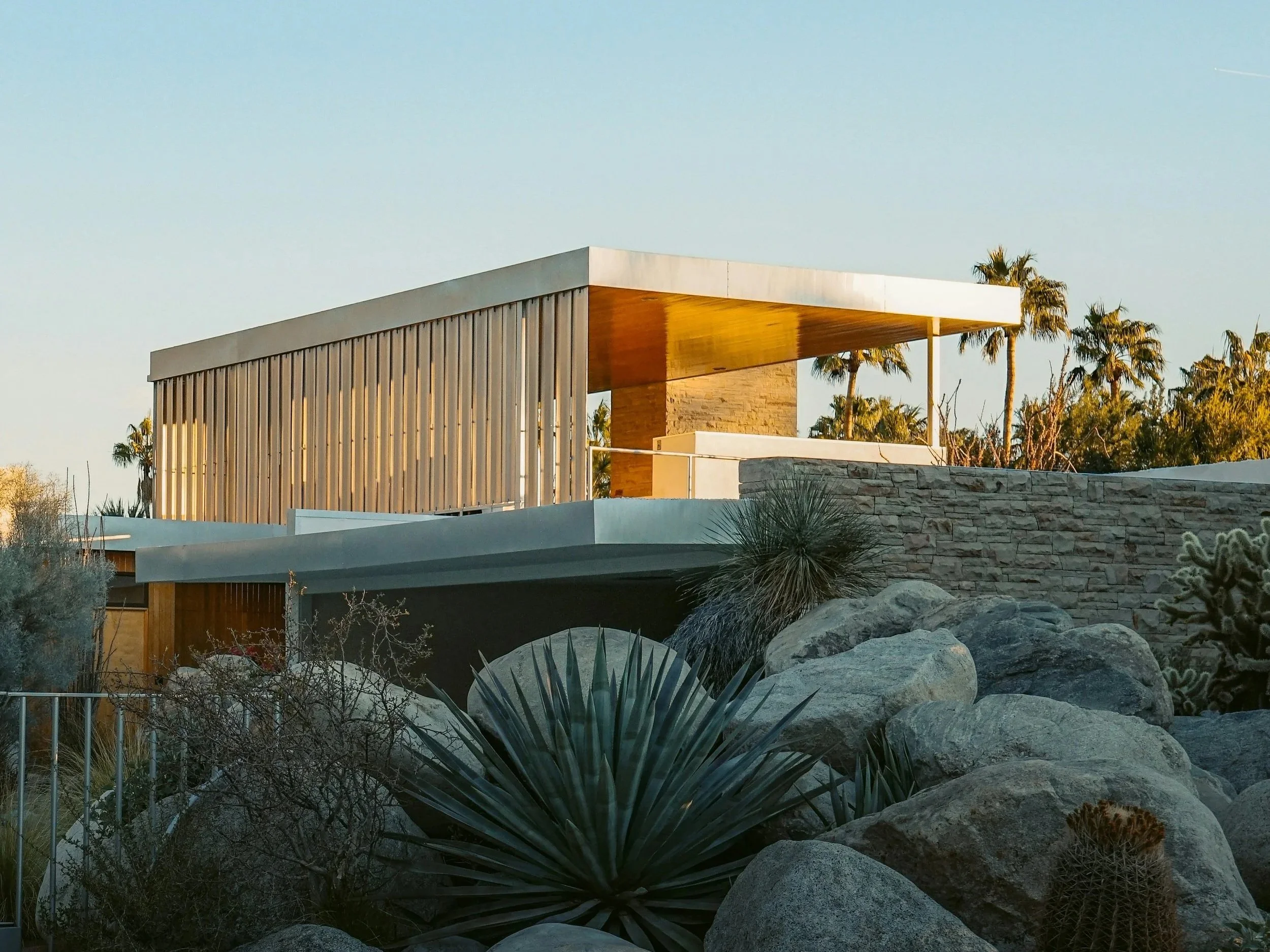
What Modernism Week Actually Is (And Why It's Worth the Trip)
If you've never been to Modernism Week, picture eleven days of architecture tours, vintage car shows, film screenings, cocktail parties, design exhibitions, home tours, and lectures – all set against the backdrop of one of the most architecturally significant cities in the world. It has grown from a modest celebration into one of the premier cultural events in the American Southwest.
The programming is genuinely impressive in its range. You might spend a morning on a guided walking tour through a neighborhood of restored Wexler homes, grab lunch at a design pop-up, and end the afternoon at a rooftop happy hour that happens to have a view of the San Jacinto Mountains. Evenings tend toward the social and celebratory – which, in Palm Springs, is basically the default setting regardless of what week it is. 😎
Modernism Week also offers a Mini Modernism Week in October for those who can't make the February event – a slightly smaller, equally well-curated version of the main affair that tends to attract the serious architecture devotees rather than the festive weekend crowd. Both are well worth experiencing.
The Homes: Hollywood Glamour Meets Desert Ingenuity
Part of what makes Modernism Week so compelling is the access it provides to private homes that would otherwise remain hidden behind their cactus hedges and security gates. The annual home tours are a true highlight – a chance to see, up close, how the principles of Desert Modernism play out in real domestic spaces.
These aren't museum pieces. Many of the homes on tour are actively lived in by people who bought them specifically because they believed in the lifestyle they represent – indoor-outdoor living, natural light as interior design, a seamless relationship between private space and the desert beyond. For anyone who has spent time in a generic condo or a builder-grade suburban home, walking through a well-preserved mid-century modern in Palm Springs is a genuinely clarifying experience.
It's hard to put into words what it feels like to stand in a house designed by Albert Frey, with the mountain as your backdrop and a January breeze moving through a space that was designed (70 years ago) to receive it exactly this way. But we'll try: it feels like someone understood something important about how we deserve to live, and then built it.
For gay men who are already drawn to design, craft, and intentional living, that feeling tends to hit especially hard.
Explore Homes in Palm Springs
Modernism Week After Dark: The City in a Different Light
One of the most underrated aspects of Modernism Week is what happens when the sun goes down. Desert evenings in February are cool, clear, and genuinely beautiful – and Palm Springs, lit against the darkening mountains, is something to see.
The mid-century buildings that define the city take on a different quality at night. The Kaufmann Desert House glows. The glass-walled homes illuminate like lanterns. Palm Canyon Drive hums with energy but never quite loses its composure. There's a specific magic to walking through a city whose bones were designed to be beautiful — and realizing that those bones look equally stunning under the stars as they do in the afternoon sun.
Several Modernism Week events are specifically designed for evenings: cocktail parties in significant homes, architectural walking tours by lamplight, rooftop gatherings with views that will make you question every life choice that led you to living somewhere with less sky. If you're planning your trip, don't treat the evenings as downtime. Treat them as highlights.
The Architecture of Preservation: Why This Matters in 2026
Preservation standards in Palm Springs are higher and more rigorously enforced than ever – and for good reason. These homes are finite, irreplaceable, and increasingly in demand. The book Palm Springs Modern, one of the first comprehensive volumes dedicated to the city's architectural heritage, helped ignite a broader cultural appreciation that has only accelerated since. Today, the homes themselves have become a revelation for many visitors: the architecture is a whole philosophy of living they didn't know they were looking for.
For those whose interest extends beyond the visit – who find themselves wondering what it would mean to actually live in one of these spaces, in this community, in this light – that question tends to have a fairly compelling answer.
Create Your Own Modernism Week Experience Year-Round
Modernism Week happens once (or twice) a year – but the architecture is a daily gift. If you want to experience the magic of Desert Modernism on your own schedule, we've built something specifically for you.
Our Mid-Century Modern Self-Guided Neighborhood Tour is Google Maps GPS-ready and takes you through the most architecturally significant neighborhoods in Palm Springs at your own pace. No tour bus schedules, no crowds – just you, the desert light, and some of the most beautiful residential architecture we have. Consider it your personal Modernism Week, available whenever you arrive.
Discover the Magic of Desert Modernism → Start Your Self-Guided Tour Here
TL;DR 😉 Why Modernism Week + Palm Springs = Peak Gay Getaway
What: Modernism Week is an 11-day festival celebrating mid-century modern architecture through tours, parties, exhibitions, and events. When: February annually (Mini Modernism Week in October). Where: Palm Springs, California – the mid-century modern capital of the world. Why it's deeply queer: Because gay men helped save, preserve, and reimagine this architecture – and the city never forgot it. Who should go: Anyone who loves beautiful design, open desert skies, great cocktails, and a community that genuinely feels like home.
Why Gay Palm Springs Is Always Worth the Trip
Palm Springs doesn't really need defending. The city has made its case beautifully for decades, and gay men have been listening. But if you're still on the fence about when to go or why Modernism Week in particular deserves a spot on your calendar, here's the short version.
Palm Springs in February is, climatically speaking, close to perfect. Daytime highs in the mid-70s, cool evenings, crisp desert air, and skies so blue they look edited. The mountains are at their most dramatic in winter light, the pools are heated, and the patio season (which never really ends here) is in full, glorious swing.
Beyond the weather, Palm Springs offers something that's become increasingly rare: a place where being gay is genuinely unremarkable. Not tolerated. Not celebrated as novelty. Just... normal. What a concept! With nearly half the population identifying as LGBTQ+ and a community infrastructure built accordingly, you can walk into almost any restaurant, shop, or social gathering and feel, without effort, that you belong. New friendships happen naturally here – over cocktails at a gallery opening, around a hotel pool, on a self-guided architecture tour that you started alone and finished with three new people you didn't know an hour ago.
That's the thing about Palm Springs that doesn't fit neatly into a travel brochure: it has a way of turning visitors into regulars, and regulars into residents. The first trip scratches the itch. The second one plants the seed. By the third, you may find yourself pricing real estate. We say that with full knowledge, because we've watched it happen – and we've lived it ourselves. 😎
Have you ever attended Modernism Week in Palm Springs? What was your favorite event or moment — and did it change how you think about architecture? Share your experiences…
Want to go deeper into what makes Palm Springs so uniquely captivating? Check out these articles from The Palm Springs Guys:
Ultimate Guide To A Modernist Getaway in Gay Palm Springs — The ideal companion piece to this article; covers tours, shopping, and how to plan a full modernist itinerary.
Palm Springs: What's Iconic, What's Changed, and What Still Matters — A deeper dive into the city's evolution and why the LGBTQ+ community remains at its heart.
Drag & Fly Tours: Anita Doll's Five Eras of Palm Springs — A fabulous and surprisingly moving history of Palm Springs told through its five distinct queer eras.
Thinking About Buying, Selling, or Relocating to Palm Springs?
Glen Nadeau – one half of The Palm Springs Guys – is a top-producing Palm Springs Realtor known for his no-pressure, highly informed approach.
If you’re just starting to explore or simply have questions, you’re always welcome to reach out.
👉 Visit Modern Living Palm Springs or contact Glen directly.
📱 Call/Text: 805-220-8097 | ✉️ glen.nadeau@compass.com

Palm Springs: What’s Iconic, What’s Changed, and What Still Matters
See why Palm Springs remains one of the most iconic LGBTQ+ destinations in California. Explore what’s changed, what still matters, and why gay men keep returning – and staying – for the lifestyle, community, and year-round sunshine.
There are plenty of places that welcome gay travelers. Palm Springs understands them – and that’s what makes it so rare and enticing. From the moment you arrive, there’s a sense that you don’t need to explain yourself here. The light is flattering, the pace is humane, and the community feels built-in. For gay men looking for a fun, affirming getaway that often turns into something more enduring, Palm Springs quietly stands alone. 🌴
It’s not a city that chases trends. It evolves deliberately while holding onto the values that made people fall in love with it decades ago. And that balance is exactly why so many longtime visitors keep coming back for more.
What Made Palm Springs Iconic in the First Place
Palm Springs has always been about escape – but not the flashy kind. Long before Instagramable pools and drag bus tours, this desert town drew people seeking privacy, restoration, and reinvention.
In the mid-20th century, Hollywood figures such as Frank Sinatra, Dean Martin, Sammy Davis Jr., Lucille Ball, and Bob Hope made Palm Springs their desert refuge – a place to disappear between projects, entertain friends, and live more freely away from the spotlight.
Midcentury modern architecture followed, shaping a city built around indoor-outdoor living, clean lines, and a belief that your environment should support your well-being – not compete for your attention. This wasn’t the intention. Hollywood icons were simply hiring the best architects at the time – and they happened to be Midcentury modern enthusiasts, so Palm Springs became their new playground.
For gay men today especially, Palm Springs offers a similar luxury as such Hollywood hideouts: space to be yourself without being watched. That quiet permission became the city’s heartbeat.
The Architecture Still Tells the Story
Midcentury modern design is much more than aesthetic in Palm Springs – it’s a lifestyle philosophy.
Homes in Palm Springs have always been designed for expanded living and entertaining. Open floor plans make it easy to gather, breezeways and patios blur the line between indoors and out, and those signature clerestory windows quietly do their job – letting the desert light in without putting life on display. Even at the neighborhood level, the architecture still encourages connection rather than isolation.
Preservation has become more intentional here as a result. Standards are higher, renovations are more thoughtful (and yes, more expensive), and there’s a deeper respect for what makes these homes special. New construction tends to borrow the spirit of midcentury design rather than copy it outright – which, when done well, keeps Palm Springs feeling current without erasing its past. We’ve often heard the term “midcentury made modern” used in this regard. But Palm Springs architecture continues to support real life, not just resale value.
Old Palm Springs vs. New Palm Springs
Palm Springs is changing all the time in smaller, predictable ways. Restaurants and small businesses open and close. The long-awaited Thompson Hotel and re-opening of The Plaza Theater have both finally taken place. Even our iconic Marilyn Monroe statue – “Forever Marilyn” – has moved 6 feet from where it once was (long story, but at least she’s still with us). The cultural scene and infrastructure are always evolving and (mostly) improving.
In addition, Palm Springs is busier than it was twenty or thirty years ago. High season now brings higher visitor volume, more short-term rentals, more events, and a downtown core that can feel electric and alive on peak weekends. Palm Canyon Drive is no longer a sleepy strip after dark, and restaurant reservations matter more than they used to.
What hasn’t changed is how the city absorbs that activity.
Palm Springs still disperses energy quickly. Outside the downtown corridor, neighborhoods remain quiet, residential, and human-scaled. Weekday mornings are calm. Early dinners are still the norm. Many locals plan around the rhythm of the week and the season, not the weekend surge. And as fulltime locals ourselves, traffic is never really an issue – even during the busiest of seasons.
The biggest difference between old and new Palm Springs is choice. You can opt into the buzz when you want it, then step back into stillness just as easily. That flexibility is what keeps the city livable, not just visitable.
And crucially, summer still resets everything. When the heat arrives, the city hands itself back to the people who live here. Tourists thin out, social life becomes more intimate, and Palm Springs returns to what it has always done best: giving people space – physically and emotionally – to live at their own pace.
The LGBTQ+ Throughline
Palm Springs’ LGBTQ+ identity isn’t new – it’s foundational.
During what Anita Doll calls The Queer Era (1980s–Present) in our article Drag & Fly Tours: Anita Doll’s Five Eras of Palm Springs, the city became a place of profound resilience. As AIDS devastated the gay community, many HIV+ men from San Francisco and beyond came here because Palm Springs hospitals were among the only ones that would treat them with dignity. Some came to heal. Some came to be cared for. All were welcomed.
From that era emerged DAP Health, a chosen family culture, and a city that learned what community actually means.
Today, nearly half of Palm Springs’ population identifies as LGBTQ+. That’s a staggering statistic – and it shows up everywhere: rainbow flags, a majority-LGBTQ city council, KGAY 106.5 FM on the dial, and a social scene rooted in inclusion rather than exclusion. Queer life here is embedded now – and we’re honored to be a small part of that.
Explore Homes in Palm Springs
Built for Connection
Palm Springs still knows how to throw a party. Poolside afternoons, themed weekends, Pride celebrations, and legendary week-day (not just weekend) nights out are very much part of the culture. That’s not going anywhere anytime soon.
What has changed is the role those moments play in people’s lives. For many visitors, especially gay men over 40, Palm Springs is more about having access to it without being trapped by it. People come here looking for pleasure that’s sustainable – social energy that doesn’t require recovery time, and fun that fits into a broader, healthier rhythm. And by “healthier,” I don’t mean drinks at Street Bar – more like connecting with folks at one of our monthly ongoing Palm Springs Guys Happy Hour Socials ;)
Here, nightlife exists alongside morning routines. You can be social without being consumed by it. It doesn’t have to be one at the expense of the other. This balance is intentional for those who embrace it here. The opportunity is built into the geography, the climate, the culture, and the community itself. Palm Springs gives people permission to calibrate their lives – and that’s why so many travelers start realizing it offers more than just a good weekend.
Why Visitors Become Long-Term Residents
This shift usually doesn’t happen on a first visit – and that’s an important distinction. For most people, Palm Springs initially registers as a break from real life: a long weekend, a pool, good dinners, maybe a themed event. It’s enjoyable, but it still lives in the “vacation” category. That’s how it began for us when we first discovered the wonders of the low desert.
The change tends to happen later, often on a second or third visit – or during a longer stay. That’s when people start noticing what their days actually feel like here. The energy is palpable and distinct. For us, it felt almost like a “future” memory – like, “yeah, I could totally see myself retiring here some day!” At the end of the pandemic, that day came sooner than we expected when we realized that we choose to improve the quality of our lives much sooner than later.
By that point, the practical pieces begin to register for many visitors. The weather is reliable, winters are mild (and short), summers reshape the pace of the city, and being outdoors year-round becomes part of daily life. The cultural layer deepens too: galleries, live music, film festivals, theater, and a dining scene that continues to expand and evolve to reflect the people.
What ultimately shifts for many visitors is that Palm Springs starts to feel like a place where your future self wouldn’t need to work as hard. Where life could be structured with more intention and less friction. That’s usually the moment when people stop talking about Palm Springs as a getaway and start quietly asking how it might fit into the next chapter of their life.
What Still Matters Most
Palm Springs has always been a place for people in transition – creative, emotional, relational, or simply seasonal. That hasn’t changed. Some things haven’t changed at all. The light still softens everything. There’s still space to think clearly, room to breathe, and a sense of safety that allows people to live openly. Community still shows up when it counts, and the overall pace of life respects your nervous system – something that feels increasingly rare elsewhere.
TL;DR (😉)
Palm Springs has learned how to evolve without erasing itself. It remains iconic because it never abandoned its wellness values. And for gay men seeking joy, connection, safety, and a lifestyle that grows with them, it’s still one of the most aligned places to visit – and quietly, to plan for the future.
Why Palm Springs Is Always a Good Idea
Whether you’re coming for a weekend escape or your fifth return trip, Palm Springs delivers something rare: ease. The weather cooperates, the culture welcomes you, and making friends feels natural. The city offers just enough magic to remind you what life can feel like when it’s lived on your terms. ☀️🏳️🌈Come for the sunshine, stay for the sense of belonging, and don’t be surprised if Palm Springs starts feeling like part of your future sooner than you expected.
What keeps you coming back? Let us know…
If you’re curious to learn more about all the fun you can have here in Palm Springs and our beautiful Coachella Valley, check out some of our blog favorites, like:
Thinking About Buying, Selling, or Relocating to Palm Springs?
Glen Nadeau – one half of The Palm Springs Guys – is a top-producing Palm Springs Realtor known for his no-pressure, highly informed approach.
If you’re just starting to explore or simply have questions, you’re always welcome to reach out.
👉 Visit Modern Living Palm Springs or contact Glen directly.
📱 Call/Text: 805-220-8097
✉️ glen.nadeau@compass.com

Drag & Fly Tours: Anita Doll’s Five Eras of Palm Springs
The five eras that shaped Palm Springs – from yesterday’s sacred springs to today’s LGBTQ+ mecca – through the eyes of local drag queen Anita Doll. Her Drag & Fly Tour blends history, humor, and high camp aboard Palm Springs’ most fabulous attraction.
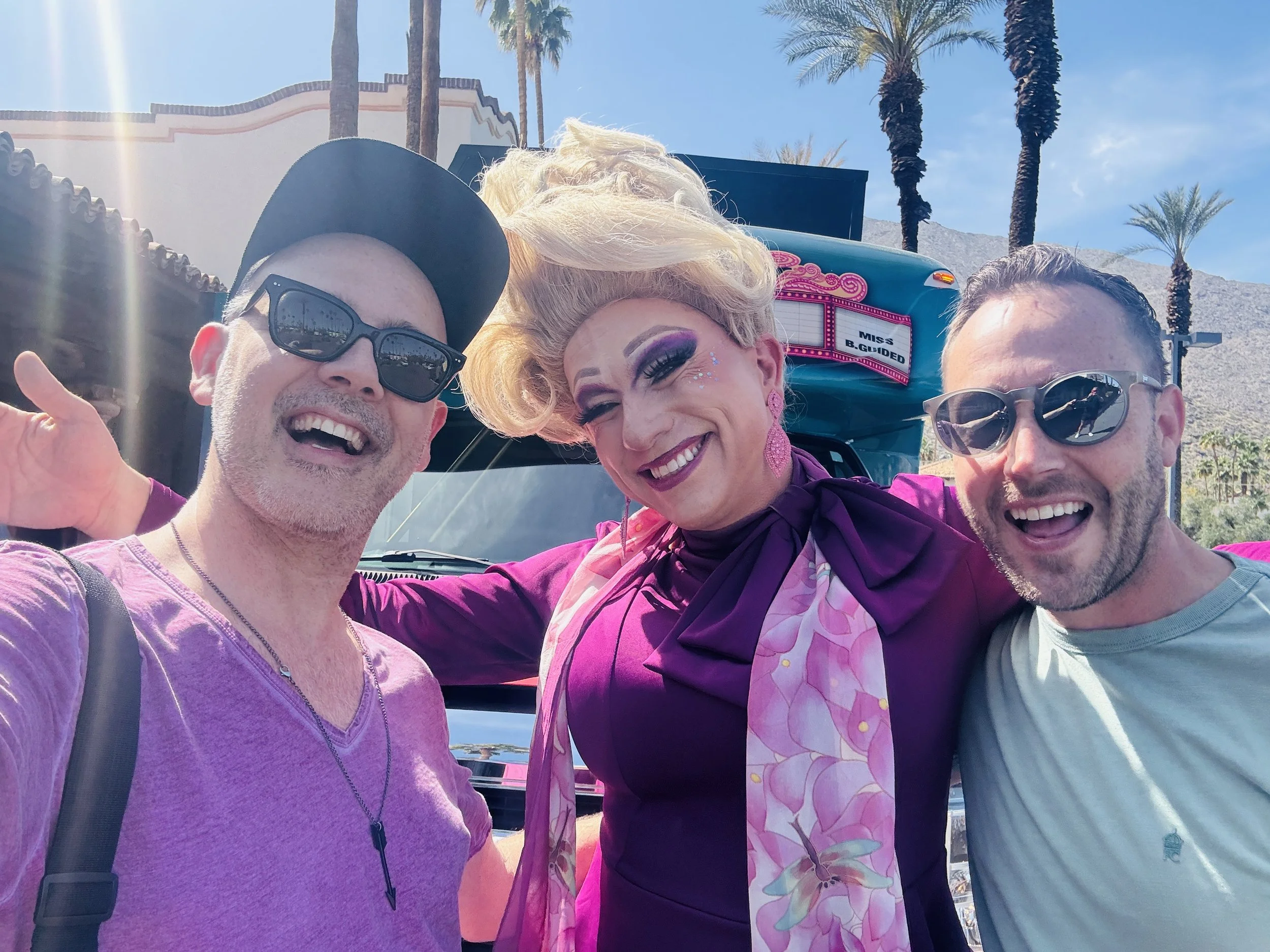
Gregory Douglass, Anita Doll & Glen Nadeau
Have you ever gotten Palm Springs history lessons from a drag queen on a tour bus with music videos, trivia, and actual prizes? Because that’s how we roll in the desert these days – literally.
Recently, The Palm Springs Guys experienced the iconic Drag & Fly Tours hosted by Anita Doll and Miss B. Guided (aka Rosemary Galore), and Palm Springs has never been more fabulously educational.
Anita, a former journalist turned storytelling showgirl, guides guests through five distinct eras that shaped Palm Springs into the queer desert utopia it is today – all aboard a luxury “theater on wheels” that turns history into herstory.
Thanks to Anita (a.k.a. JD Cargill), we now have a sassy, smart, and deeply thoughtful breakdown of Palm Springs’ queer-coded history – and as far as we’re concerned, it’s a theory worth considering.
If you have anything you’d like to contribute to this article, please email us (and let us know why).
In the meantime, here is Drag & Fly Tour’s Anita Doll’s five eras of Palm Springs...
Era 1: The Agua Caliente Era (Ancient–19th Century)

Cahuilla people courtesy of the Palm Springs Historical Society
Before the movie stars and muscle gays, the Agua Caliente Band of Cahuilla Indians were the first to call Palm Springs home – for thousands of years before Western settlers. The sacred hot springs were the literal and spiritual lifeblood of this region.
They believed in at least three genders, recognizing a “Two-Spirit” identity long before Westerners caught up. Their worldview instinctively saw gender as non-binary, rooted in spiritual and social balance – which means that this level of Queer wisdom has been around longer than all 1 million seasons of Drag Race.
The spring, still bubbling beneath the luxurious Séc-he Spa, was much more than just a spa day back then. It was survival, spirituality, and sanctuary. The stage was being set for Palm Springs eventually becoming a place of healing, transformation, and deeper connection.
In many ways, this era centers around the healing power of water – a resource so vital that it defined where and how people lived for generations.
Era 2: The Founding Mothers Era (Late 1800s–Early 1900s)

Nellie with her sons Owen and George. Photo courtesy of the Palm Springs Historical Society
The early 1900s gave us the original wellness influencers: a fierce group of women who built guest houses, sanitariums, and health retreats around those mineral-rich waters and our refreshingly dry desert air.
Enter Nellie Coffman (who built the iconic Desert Inn in 1909), Pearl McCallum, Cornelia White, Ruth Hardy, and more. These ladies created what Anita calls the “Girl Power Era,” establishing Palm Springs as a healing hideaway, rooted in the belief that the mineral-rich waters and arid desert air offered therapeutic benefits – especially for those suffering respiratory conditions.
They were building empires before they could vote, honey.
Today, their impact still echoes. The site of the Desert Inn is now home to the Rowan Hotel, and the Marilyn Monroe statue is just a stone throw away – both symbols of modern Palm Springs still standing on historic ground.
Era 3: The Hollywood’s Playground Era (1920s–1960s)
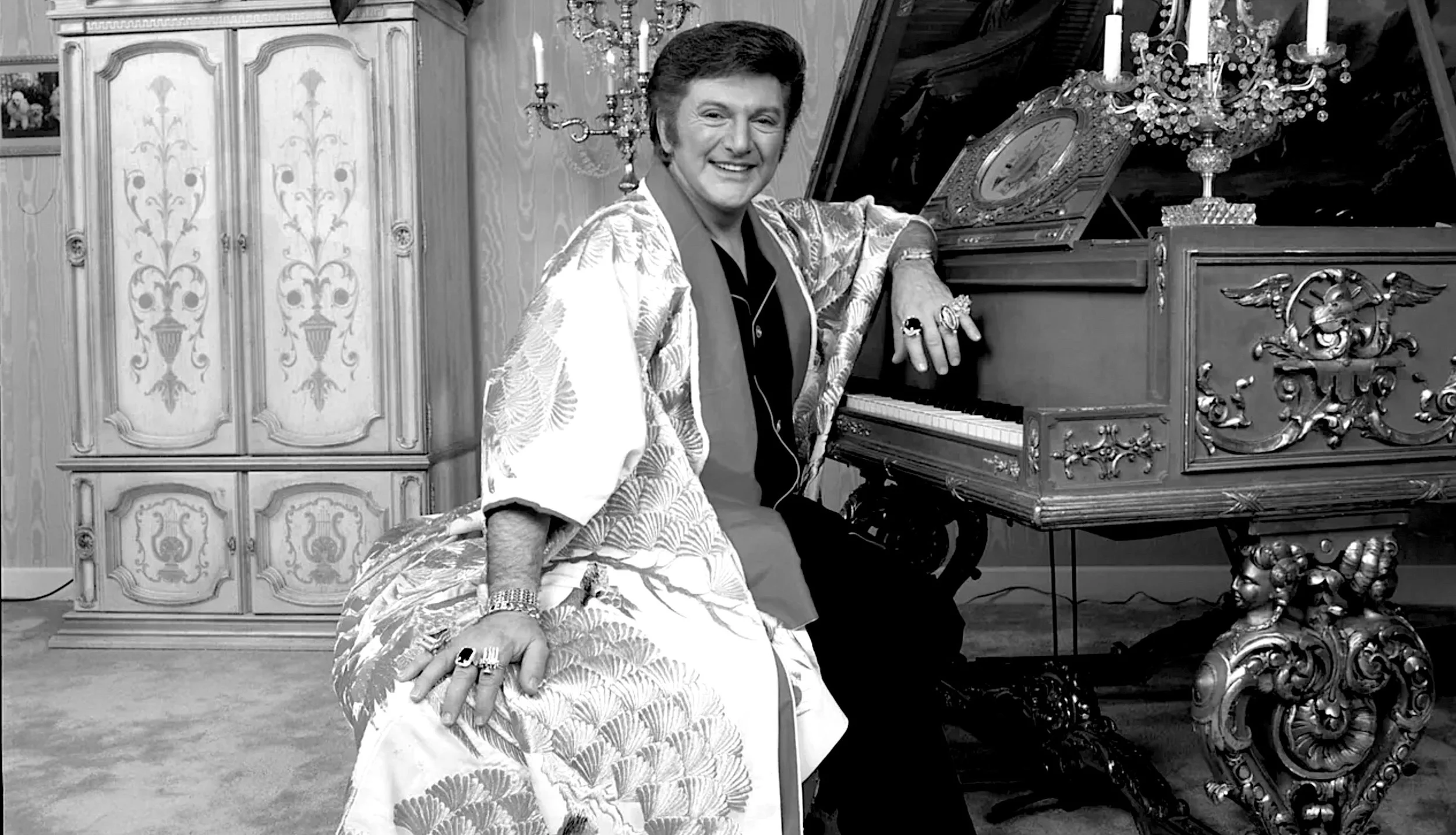
Liberace in Palm Springs
Once word got out about Palm Springs, the stars began to descend. Why? Because Palm Springs was just far enough (100 miles) from Hollywood that paparazzi wouldn't follow. Locals still refer to this as the “100 mile” rule.
Actors were also contractually obligated to still be close enough if they needed to be called into the studio last-minute. Palm Springs was the perfect escape.
Later, once cameras did arrive, the resorts were walled, gated, and gloriously hush-hush. Resorts were discreet, and owners were known for fiercely protecting their guests' privacy.
From the silent film era to the Rat Pack years, Palm Springs became a secret escape for the famous and fabulous during this era: Liberace, Rock Hudson, Truman Capote, Tallulah Bankhead, Marlene Dietrich, Cary Grant, and dozens more.
This was the era of mental health and personal freedom. Queer (but closeted) stars with “career-ending secrets” could live, love, and lounge under the radar – poolside martini in hand. 🍸
Notable venues included El Mirador, Ingleside Inn, the Desert Inn, the Oasis Hotel, and the Racquet Club (where Marilyn Monroe famously caught the eye of her agent).
Era 4: The Modernism Era (1940s–1970s)

The Sinatra House History with Piano Shaped Swimming Pool
Eventually, Hollywood’s elite stopped renting and started building.
As stars like Frank Sinatra and Bob Hope began buying and building homes, they hired the top architects of the day (now known as the Modern Masters – Albert Frey, Donald Wexler, William Krisel) to design custom homes that mirrored their liberated lives.
It was all about clean lines, indoor-outdoor living, and a fresh way of thinking – modernism as metaphor. Open floor plans met open sexuality, and a new aesthetic was born. Modernism symbolized freedom of thought and lifestyle – again tying back to health in terms of creative and personal expression.
The stars settled in, and the culture of design, art, and inclusivity blossomed. Even behind the scenes, queer influence shaped Palm Springs’ look and feel.
So next time you’re touring a MCM house in Palm Springs, remember that you’re walking through decades of queer-forward design thinking.
Search Homes at Modern Living Palm Springs
Era 5: The Queer Era (1980s–Present)

Then came the 1980s. A dark time, indeed – but also one of resilience.
As AIDS devastated our community, many sick gay men came to Palm Springs seeking the same healing energy their predecessors had. Gay men from San Francisco who were HIV+ had nowhere else to turn because the only hospitals who would treat them were here in Palm Springs. They essentially came here to die – and be cared for with dignity until then.
This marked the beginning of Desert AIDS Project (now DAP Health) – and from there, something powerful bloomed.
Palm Springs became a safe haven for the LGBTQ+ community. Over the decades, a chosen family gathered: survivors, lovers, best friends, and allies. Now, it’s a place where representation reigns – from KGAY 106.5 FM to rainbow crosswalks and a majority-LGBTQ city council.
Today, inclusivity is a lifestyle here in Palm Springs: The city is now a global queer mecca, where identity is celebrated, and the healing, expression, and liberation continues.
The Common Thread: Health
As Anita brilliantly summarizes, health is the throughline across all five eras:
The Agua Caliente: Water as sacred life force
Founding Mothers: Wellness retreats in the healing desert air
Hollywood: Emotional and mental refuge
Modernism: Design as freedom of thought and spirit
Queer Era: Healing and community through crisis and recovery
Why You Belong Here, Too
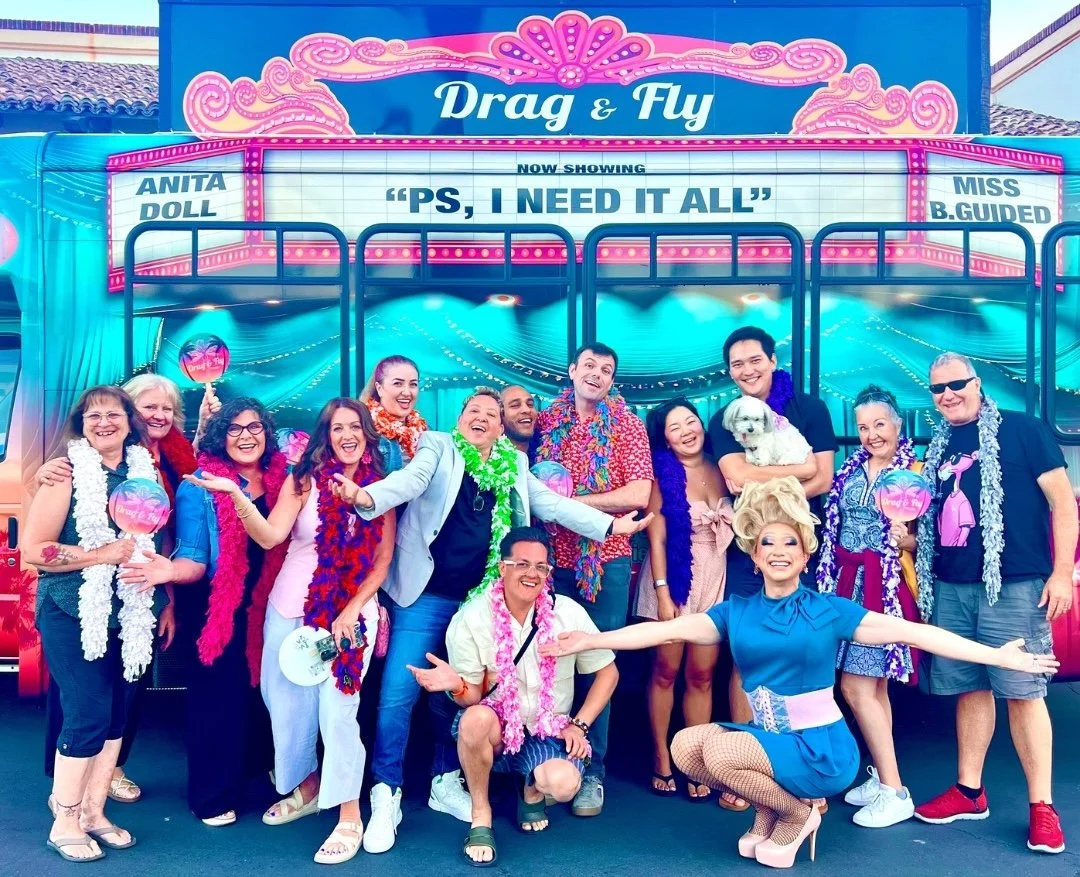
Anita Doll’s Drag & Fly Tours
Whether it’s the sacred wisdom of the Agua Caliente or the fierce resilience of the queer community during the AIDS crisis, Palm Springs has always been a place of transformation, freedom, and healing – especially for those of us seeking to live our best gay lives. And thanks to Anita Doll’s Drag & Fly Tours, this rich history is now more accessible and entertaining than ever.
So, if you're planning a visit (and you absolutely should), add this drag queen-hosted joyride to your must-do list. Between the sunshine, the architecture, the pool parties, and now the most fabulous sightseeing tour on wheels, Palm Springs proves again and again that there’s nowhere quite like it.
What’s your favorite piece of Palm Springs queer history? Share your experiences!
If you’re curious to learn more about all the fun you can have here in Palm Springs and our beautiful Coachella Valley, check out some of our blog favorites, like:
Curious About Buying, Selling, or Relocating?
In addition to being one half of The Palm Springs Guys – Glen Nadeau is one of Palm Springs’ top-producing Realtors, known for his no-pressure approach, deep market expertise, and genuine commitment to his clients.
A member of The Caldwell & Linger Group – ranked a Top Real Estate Team by Palm Springs Life Magazine – Glen is also backed by COMPASS, which remains the #1 ranked brokerage in the country. Glen takes great pride in knowing that his clients are in such good hands.
“Hospitality is what drives me because helping folks achieve their real estate goals is essentially helping them build a better life for themselves.”
Visit Modern Living Palm Springs, or reach out to me directly. Ask me anything – I promise to give you much more support than ChatGPT, Google or the news will.
Your Palm Springs Insider,
Glen Nadeau (pronounced “Ned-oh” as in “meadow”)
📱 Call or Text: 805-220-8097
📨 Email: glen.nadeau@compass.com
🔎My Google Business Reviews ⭐️⭐️⭐️⭐️⭐️